


Stretch vs fitted sofa covers compared on fit, looks, price, and care, so you can pick the right cover for your couch and lifestyle.
Sofas take a beating. Between spilled coffee, pet claws, and afternoon naps, even a couch you love can look tired within a couple of years. A cover is one of the easiest fixes, but picking one isn’t just a matter of choosing a color. The real decision is stretch vs fitted sofa covers, two styles that look nearly identical in a product photo and behave very differently once they’re on your sofa. One hugs the frame like a pair of leggings. The other is cut and sewn to match the sofa’s shape, more like a tailored jacket. This guide explains how each works, where each one shines, and how to decide which belongs in your living room.
What Are Stretch Sofa Covers?
Stretch sofa covers are made from elastic fabric, usually a polyester and spandex blend, often with a knit or jacquard texture. Because the material gives, one cover can fit a range of sizes. Most brands sell them by seat count, such as loveseat, three-seater, or four-seater, rather than by exact measurements.
Installing one is simple in theory. You pull the cover over the back and arms, tuck the extra fabric into the gaps around the cushions, and let the elasticity do the work. Many come with foam sticks or straps that hold the tucked edges in place. That flexibility is the main selling point, and it’s why stretch covers are so popular for people who want a fast, low-effort update.
What Are Fitted Sofa Covers?
A fitted sofa cover is shaped to match a sofa’s dimensions more precisely. Think of it as a slipcover with structure. It usually has separate pieces for the back, the arms, and each seat cushion, finished with zippers, ties, or elastic hems at the bottom. The fabric tends to be less stretchy, with cotton, linen, twill, and canvas blends all common.
Because the pattern is cut for a specific size, a fitted cover follows the original lines of your sofa, with crisp corners and a more upholstered look. The trade-off is that sizing matters. A fitted cover won’t forgive a sofa that’s noticeably bigger than the measurements it was made for. One more note: retailers use these terms loosely, so always read the product description and the size chart instead of relying on the name alone.
Stretch vs Fitted Sofa Covers: The Key Differences
Fit and Appearance
Stretch covers deliver a good-enough fit on most standard sofas, but they can look a little pulled or wrinkled at the corners, and the shape of the sofa underneath tends to show through. Patterned fabrics can also distort slightly as they stretch. Fitted covers, when sized correctly, look much closer to real upholstery. The seams line up with the sofa’s edges, the arms look clean, and the overall effect is polished. If appearance is your top priority, fitted usually wins.
Installation and Care
A stretch cover can go on in about fifteen minutes, though the tucking and smoothing is the fiddly part, and covers often shift when people sit down and stand up. You may find yourself re-tucking every few days. Fitted covers take longer the first time because of the zippers, ties, and separate cushion pieces, but they usually stay put once they’re on.
Care is similar for both. Most stretch covers are machine washable and dry quickly, but high heat can weaken the elastic fibers, so a gentle cycle and low-heat drying go a long way. Fitted covers made from cotton or linen can shrink if you ignore the care label, so check it before the first wash.
Durability and Protection
Stretch fabric can pill and lose some of its snap over time, especially with frequent hot washes. Thinner versions may also catch on a cat’s claws. Heavier fitted fabrics like twill and canvas generally handle daily wear better and add more of a physical barrier between you and the original upholstery. If you want a cover that protects as much as it decorates, the thicker fabric of a fitted cover has the edge.
Price
Stretch covers are generally the cheaper option, which makes sense given that one size range covers many sofas. Fitted covers cost more, and custom-made ones cost the most, since the fabric is heavier and the construction is more detailed. Still, a well-made fitted cover that lasts for years can work out as better value than a stretch cover you replace every season or two.
Which Cover Suits Your Home?
Homes with Pets and Kids
Households with pets and children need covers that can survive constant use and frequent washing. A thick, tightly woven fitted cover resists claws and spills better, and a spare set lets you swap one in while the other is in the laundry. That said, a stretch cover is a decent budget choice if your pets aren’t aggressive scratchers, because it’s easy to throw in the wash and replace when it wears out. If your dog or cat likes to dig, go for thicker fabric whichever style you choose.
Unusual or Oversized Sofas
Stretch covers work well on sofas with odd shapes, such as rounded arms, curved backs, or recliners, because the elastic can mold around them. The same flexibility helps with sectionals, which often need a separate cover for each piece. Fitted covers are better when your sofa is a standard shape and you want a tidy look, but they can be frustrating on irregular designs where the pattern simply wasn’t made to match.
How to Choose Between Stretch and Fitted Covers
A few small steps make the decision much easier.
Measure First
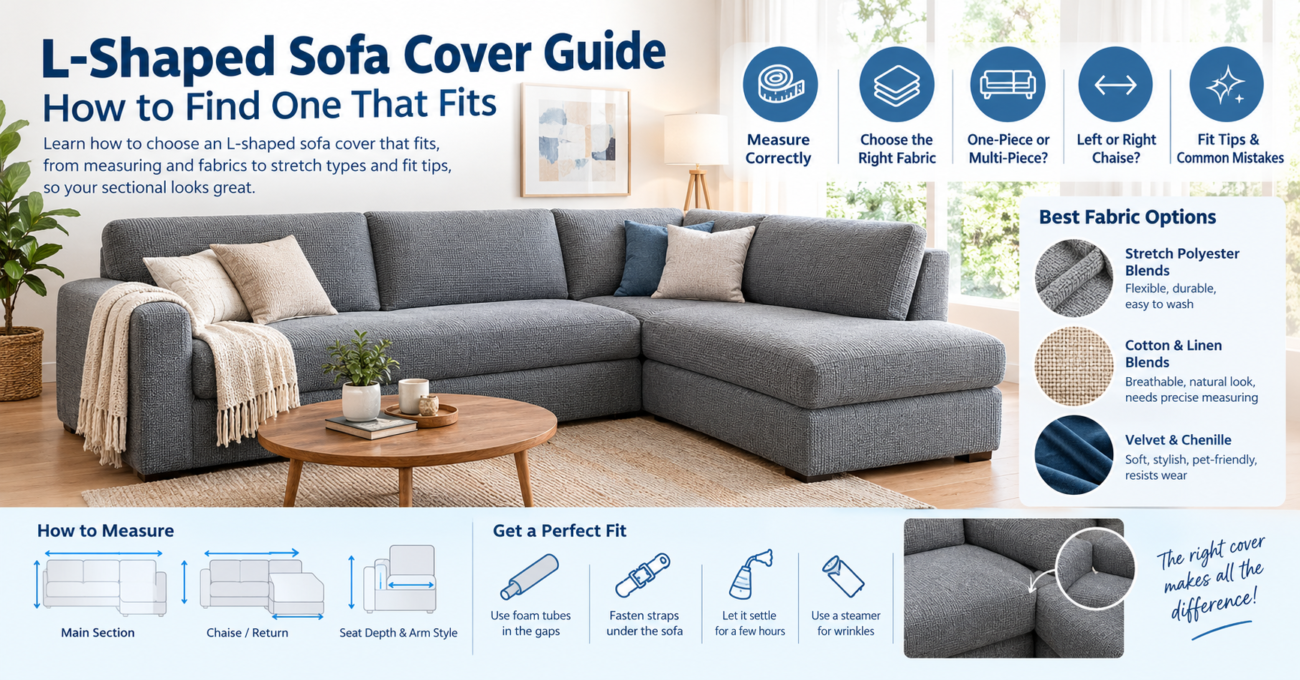
Measure the width of the sofa at its widest point, the height of the back, and the depth of the seat. Compare those numbers with the manufacturer’s size chart. Stretch covers are forgiving if you land between sizes, but fitted covers are not, so be honest about your measurements.
Check the Fabric
Look at the fabric weight and the blend. A higher spandex content gives more stretch but can feel thin, while a cotton or linen blend feels sturdier but gives less. Check for care instructions, too. Machine-washable covers are far more practical for a busy household.
Common Mistakes to Avoid
The most common mistake is buying by seat count alone and ignoring the actual dimensions. A sofa with deep seats or tall arms can be too big for a cover labeled for its seating capacity. Another is expecting a stretch cover to stay perfectly smooth without any upkeep. It won’t, and a few foam tucking sticks help a lot. People also forget to account for arm covers on sofas with wide, padded arms, and some covers only fit slim ones. Finally, don’t ignore the washing instructions. A cover shrunk in a hot dryer is a cover wasted.
Conclusion
Choosing between stretch vs fitted sofa covers comes down to what you value most. Stretch covers are affordable, flexible, and quick to install, which makes them a smart pick for odd-shaped sofas, rentals, and tight budgets. Fitted covers cost more and demand careful measuring, but they reward you with a cleaner look, better staying power, and tougher protection. Think about your sofa’s shape, your household, and how much fuss you’re willing to tolerate, and the right choice usually becomes obvious.
Frequently Asked Questions
Do stretch covers fit every sofa?
No. They fit a wide range of sizes, but they’re still sold by size category, and a cover that’s too small will strain at the seams while one that’s too large will bunch up. Always compare your sofa’s measurements to the size chart and pay attention to the arm and back height.
Can fitted covers be used on recliners or sectionals?
Yes, but you need covers made for those shapes. Many brands sell recliner-specific and sectional-specific fitted designs. Standard sofa covers won’t work properly, so confirm the product is made for your furniture type.
Which cover is better for pets?
Fitted covers made from thick fabric like canvas or twill generally handle claws and fur better. Stretch covers can work for gentle pets, but thin ones snag easily. Whatever you choose, a washable cover makes pet hair and accidents much easier to manage.
How do I stop a stretch cover from slipping?
Push foam tucking sticks into the gaps around the cushions and arms, and smooth the fabric firmly into the crevices. Some covers include straps that go under the sofa, which helps hold them in place. A quick adjustment every few days keeps things neat.
How should I wash my sofa cover?
Follow the label. For most stretch covers, a gentle machine cycle in cold or warm water and low-heat drying works best. Fitted covers in cotton or linen may need cooler water to prevent shrinking, and some benefit from air drying. Putting a cover back on slightly damp can help it settle into place.


One thought on “Stretch vs Fitted Sofa Covers: Which One Is Right for You?”