
Learn how to keep a sofa cover from slipping with 7 simple fixes, from foam tubes to grip pads, so your couch stays neat all day.
You sit down, shift a little, and feel it happen. The cover creeps forward, a wad of fabric bunches under your leg, and the tidy look you created this morning is gone. If you have ever wondered how to keep a sofa cover from slipping, you are far from alone. Slipcovers and stretch covers are an affordable way to protect a couch and refresh a room, but they only earn their keep when they stay in place. The good news is that most slipping problems are easy to solve with inexpensive tools you may already own. Below, you will find out why covers move, seven practical fixes, and the mistakes that quietly undo your hard work.
Why Does a Sofa Cover Keep Slipping?
Before fixing the problem, it helps to understand it. A cover moves for a few predictable reasons, and knowing which one applies to your sofa will save you from spending money on the wrong solution.
Slick Upholstery Underneath
Leather, faux leather, microfiber, and tightly woven cotton all have very little grip. Place a cover on top and the two surfaces glide against each other like socks on a polished floor. Every time you sit down or stand up, the cover shifts a few millimeters, and those small movements add up fast.
A Poor Fit and Daily Movement
A cover that is too large leaves extra fabric with nowhere to go, so it bunches and drifts. One that is too small gets stretched tight and pops loose at the corners. Add kids, pets, and a favorite lounging spot, and even a well-sized cover gets pulled around constantly.
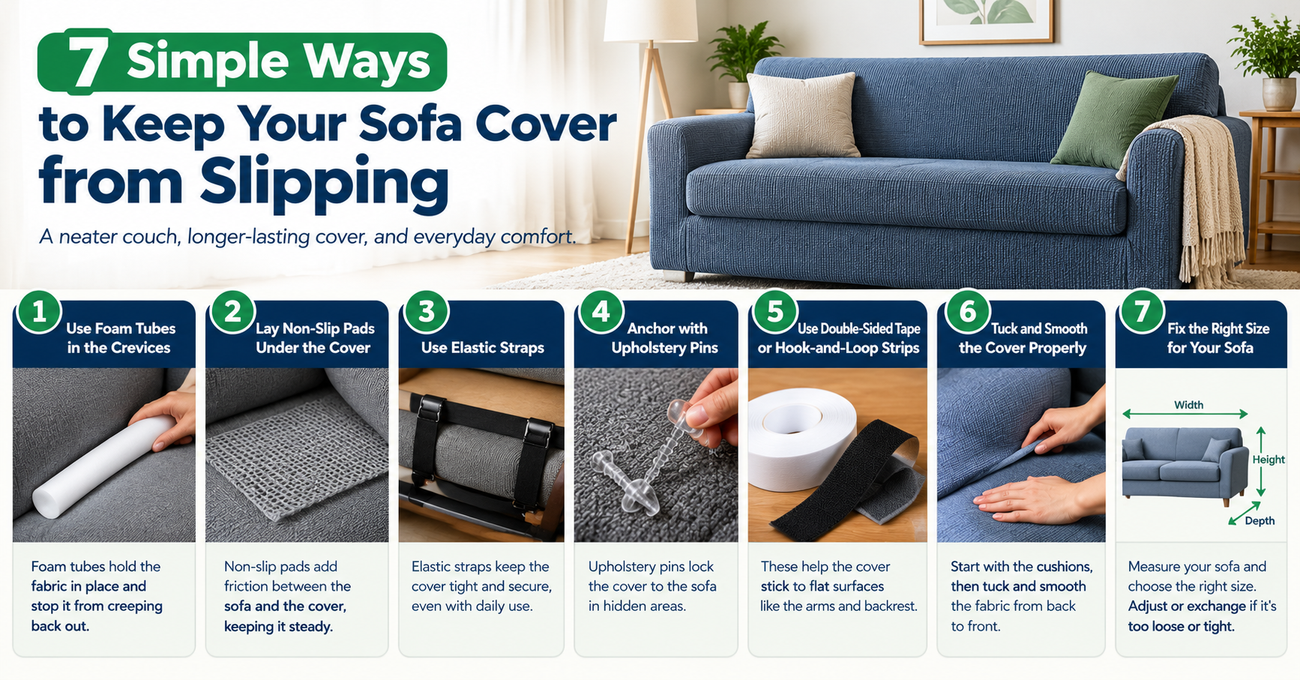
7 Simple Ways to Stop Your Sofa Cover from Slipping
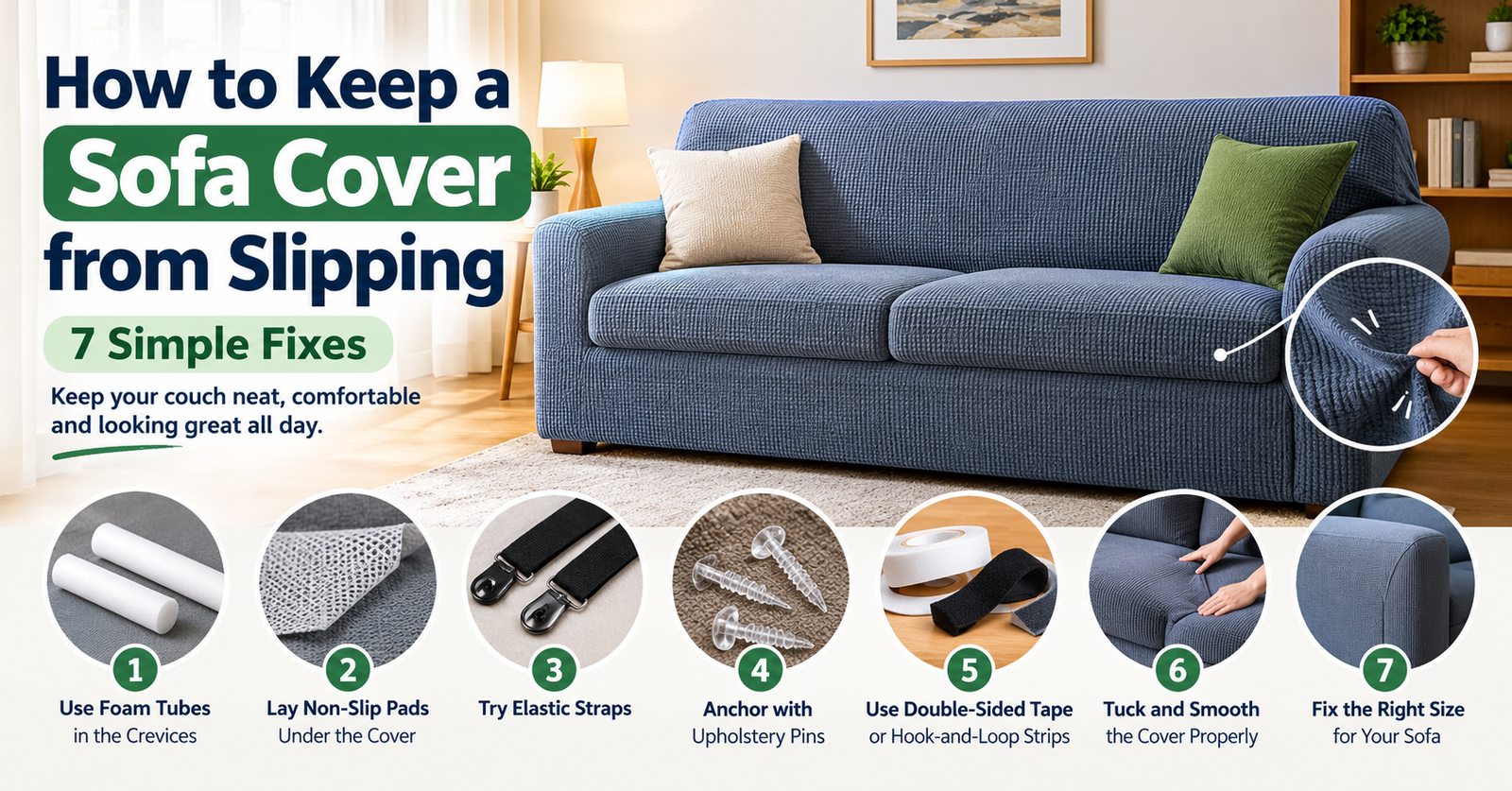
1. Push Foam Tubes into the Crevices
Foam tubes, often sold as sofa cover grips or tuck-in rods, are the classic fix. You push the excess fabric into the gap between the seat and the backrest or armrest, then wedge a tube in behind it. The tube holds the fabric firmly in place so it can’t creep back out. A cut section of pool noodle works just as well if you want a budget version. Pick a tube slightly wider than the gap so it fits snugly.
2. Lay Non-Slip Pads Under the Cover
Rubber-style mesh pads, the kind used under rugs or in kitchen drawers, add friction exactly where you need it. Cut a piece to the size of each seat and slide it between the sofa and the cover. Open-weave mesh is usually the better choice because it breathes and is less likely to leave marks. Test a small, hidden spot first if your upholstery is delicate.
3. Use Elastic Straps
Many covers come with straps sewn into the underside. Loop them around the back of the sofa or beneath the seat and fasten them securely. If your cover didn’t include any, adjustable elastic straps with clips are inexpensive and easy to add. Snug is the goal, not tight. Overtightening strains the seams and can pull the cover out of shape somewhere else.
4. Anchor It with Upholstery Pins
Clear twist pins look like tiny corkscrews. You push them through the cover and into the fabric of the sofa, usually in hidden folds at the back or sides. They are excellent on cloth couches, but skip them on leather, because every pin leaves a permanent hole.
5. Try Removable Double-Sided Tape or Hook-and-Loop Strips
For armrests and the top of the backrest, removable double-sided tape or hook-and-loop strips can bond the cover to the frame. Check the packaging to make sure the adhesive is meant for fabric and leaves no residue, and test it somewhere out of sight first. This method suits flat, firm surfaces better than soft, squishy ones.
6. Tuck and Smooth the Cover the Right Way
Sometimes the problem is simply how the cover was installed. Start with the cushions removed and the cover centered on the frame. Pull the fabric straight, then work from the back toward the front so creases are pushed out instead of trapped underneath.
Seat Cushions
Fit each cushion cover separately, zip it up, and line up the seams with the cushion edges before putting it back. A crooked seam is often what makes the whole seat look twisted.
Arms and Backrest
Tuck the fabric deep into the crevices with your flat hand, then smooth it upward toward the top. Finish by tugging the hem evenly all the way around so the weight is balanced.
7. Fix a Cover That Is the Wrong Size
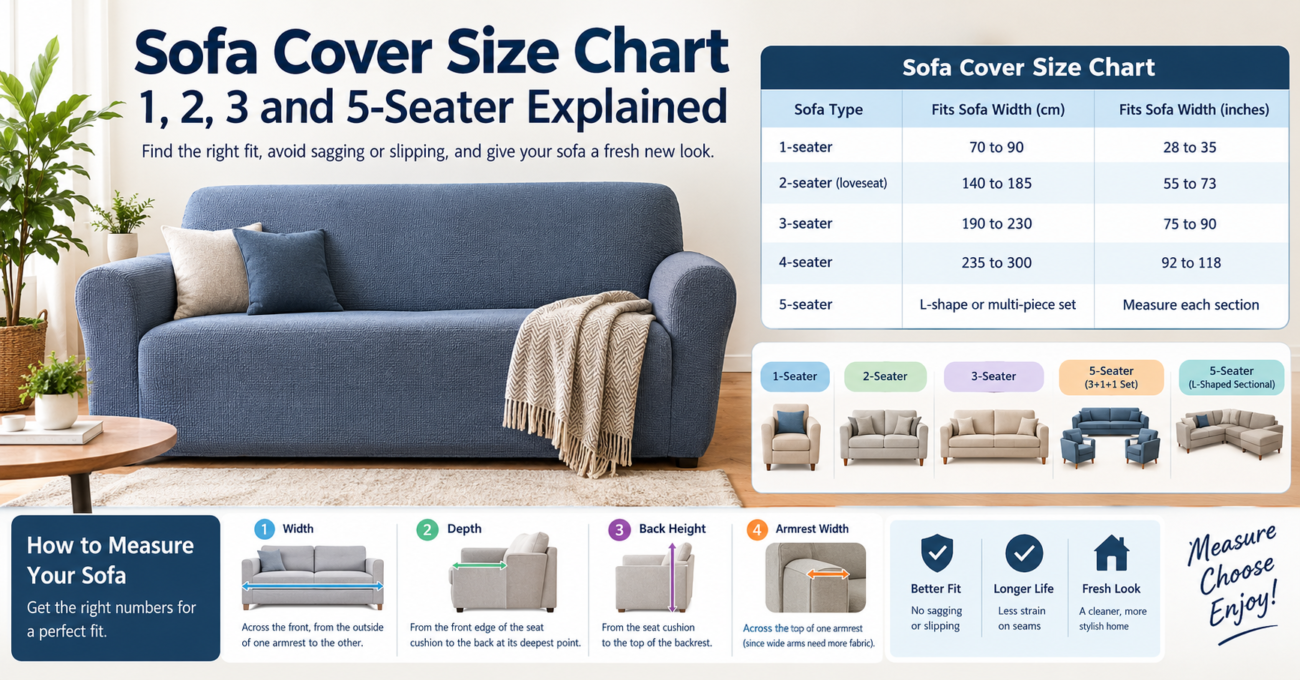
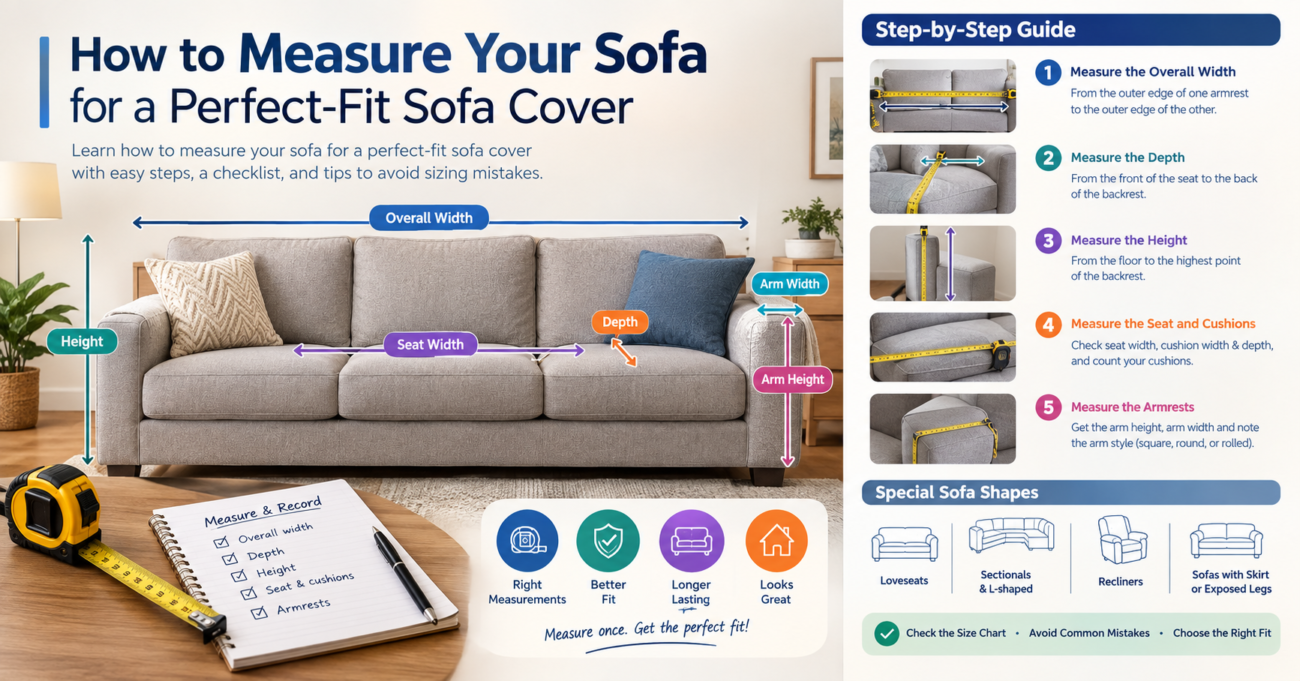
If your cover is loose despite everything above, the size may be the real culprit. Measure your sofa’s width, depth, and arm height and compare them with the cover’s size chart. For a slightly oversized cover, you can gather the extra fabric at the back with binder clips or a few quick stitches. If it is far too big, exchanging it for a closer fit will do more than any accessory can.
Common Mistakes That Make Slipping Worse
Even good fixes fail when a few habits get in the way. Keep an eye out for these:
- Pulling the cover too tight, which stresses seams and makes corners spring loose.
- Skipping the cushion step and letting the cushions shift independently inside the cover.
- Using adhesive or pins on leather and delicate fabrics without testing first.
- Relying on one method everywhere, when seats, arms, and backs often need different solutions.
Keeping the Cover in Place Long-Term
A little upkeep keeps everything working. Re-tuck the fabric once a week, because normal use gradually works it loose. Wash the cover according to its care label, since hot water can shrink some fabrics and change the fit. Grip pads collect dust that reduces their friction, so rinse them gently with mild soap and let them dry fully before putting them back.
Conclusion
Keeping a sofa cover from slipping is rarely about buying a more expensive cover. It comes down to adding friction, anchoring the fabric in the gaps, and making sure the size is right. Start with the easiest options, foam tubes and non-slip pads, and add straps, pins, or tape only where you still see movement. With a proper tuck and a quick weekly touch-up, your couch can look neat and stay comfortable day after day.
Frequently Asked Questions
What is the best way to keep a slipcover in place?
For most sofas, foam tubes pushed into the seat crevices give the biggest improvement for the lowest cost. Pair them with a non-slip mesh pad under the seat cushions, and you will solve the majority of slipping problems without touching the sofa itself.
Can I use these fixes on a leather sofa?
Yes, but choose gentler options. Foam tubes, non-slip pads, and elastic straps are all safe for leather. Avoid upholstery pins, which leave holes, and test any tape on a hidden area first, since some adhesives can mark or lift the finish.
Why does my cover bunch up in the middle of the seat?
Bunching usually means the cover is too large or was not pulled flat during installation. Remove the cushions, smooth the fabric from the back toward the front, and tuck the extra into the crevices. A grip pad under the seat will help it stay flat.
How tight should a sofa cover be?
It should look smooth and feel snug, but you should still be able to slide a hand under the fabric at the arms. If it feels stretched like a drum, it is too tight and the corners will pop loose with regular use.
Do non-slip pads damage upholstery?
Quality open-weave mesh pads are generally safe because they are designed for rugs and delicate surfaces. Avoid solid rubber on fragile or heat-sensitive fabrics, and always test a small area first if you are unsure.