
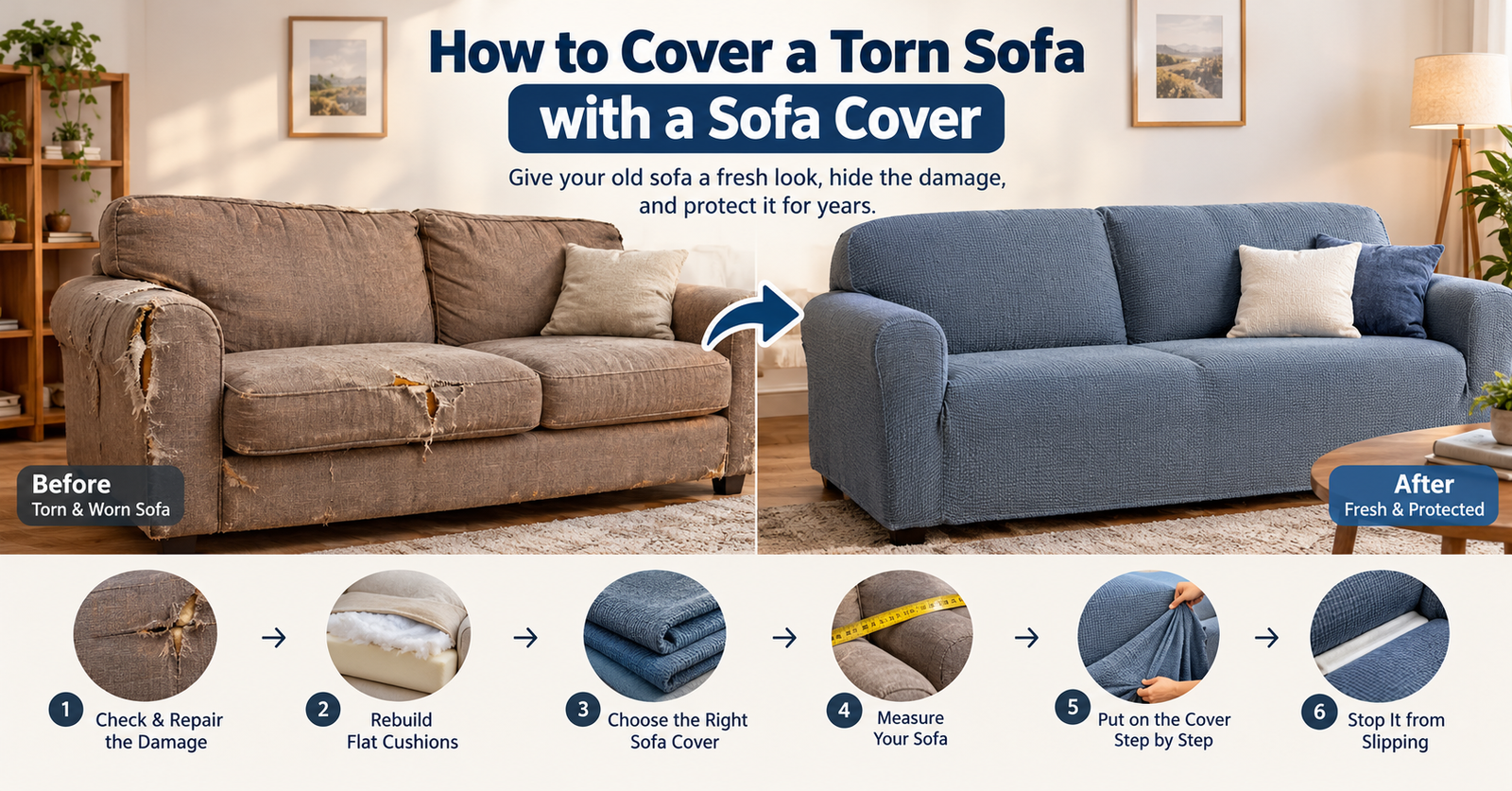
Learn how to cover an old, torn sofa with a sofa cover, from prepping the damage to getting a smooth fit that lasts.
A torn sofa doesn’t have to end up on the curb. If the frame is solid and the cushions still hold you up, learning how to cover an old, torn sofa with a sofa cover can give the piece a second life for a fraction of the cost of replacing it. A good cover hides rips, stains, and faded fabric, protects the upholstery from further wear, and can change the whole look of your living room. The trick is doing it properly. A cover thrown over a damaged sofa tends to bunch, slide, and show every lump underneath. This guide walks you through the process, from checking the damage to getting a smooth, lasting fit.
Can a Sofa Cover Really Hide a Torn Sofa?
Yes, in most cases, with one condition: the damage has to be cosmetic rather than structural. Rips in the fabric, worn arms, pet scratches, and stains are all easy for a cover to hide. A broken frame, collapsed springs, or cushions with no support left are different. A cover will make those problems look better, but it won’t make them feel better. Before spending any money, sit on each seat and press down. If it feels firm and the frame doesn’t creak or wobble, your sofa is a great candidate for a cover.
Check and Repair the Damage First
Skipping prep is the most common reason covers look sloppy. Ten minutes of repair work underneath makes a big difference to how the finished sofa looks.
Fix Tears and Loose Fabric
Start with the tears themselves. A ragged edge can poke through a thin cover, and exposed foam or stuffing can snag the fabric every time someone sits down. Trim loose threads, then tuck any visible padding back inside. For small rips, an iron-on patch or fabric tape works well. For bigger holes, cut a piece of sturdy cloth slightly larger than the tear, slide it inside, and glue it down with upholstery adhesive. You’re not aiming for a pretty repair. You just want a flat, smooth surface so nothing shows through later. Vacuum the whole sofa afterward, since dust and pet hair trapped under a cover can get smelly.
Rebuild Flat Cushions
Flattened cushions are the other giveaway of an old sofa. Fluffing helps a little, but wrapping each cushion in a layer of polyester batting or adding a thin foam topper brings the shape back. Secure the batting with a few stitches or fabric tape. Also cover any exposed staples, zippers, or sharp metal edges with masking tape, because these can wear through a new cover quickly.
Choosing the Right Sofa Cover
Not every cover suits a damaged sofa. The style and fabric you choose decide how much of the damage stays hidden, so it’s worth slowing down here.
Stretch Covers vs. Fitted Slipcovers
Stretch covers are made from elastic fabric, usually a polyester and spandex blend, and they hug the sofa’s shape. They’re affordable, easy to put on, and forgiving if your sofa has an unusual shape. Their weakness is that stretchy fabric can reveal bumps and deep tears underneath, so they work best after you’ve done the repairs above.
Fitted slipcovers are cut and sewn to match a sofa’s dimensions and are usually made from heavier fabric like cotton twill or canvas. They look more tailored and hide damage better, but they cost more and need accurate measurements. If your sofa has serious wear, a slipcover is often the better choice.
Pick Thick Fabric and the Right Color
Thin, light-colored fabric is the enemy of a torn sofa, since shadows and texture from the damage show right through. Choose a thicker material such as microfiber, quilted cotton, or velvet, and lean toward medium or darker shades or a subtle pattern. A textured weave or a small print is especially good at camouflaging small lumps. If you have pets or kids, look for a water-resistant or washable option so the cover keeps working for you.
How to Measure Your Sofa
Covers are sold by seat count (one, two, three, or four seats), but sizes vary between brands, so measure before you order. Measure the width across the widest point of the backrest, the height from the floor to the top of the back, and the depth from the front edge of the seat to the back. If your sofa has high or wide arms, measure those as well. Then compare your numbers to the manufacturer’s size chart. If you land between two sizes, go with the larger one for a stretch cover, since a little extra fabric is easier to tuck than a cover that’s too tight. Be careful with oversized or recliner sofas, which often need a specially designed cover.
How to Put on a Sofa Cover Step by Step
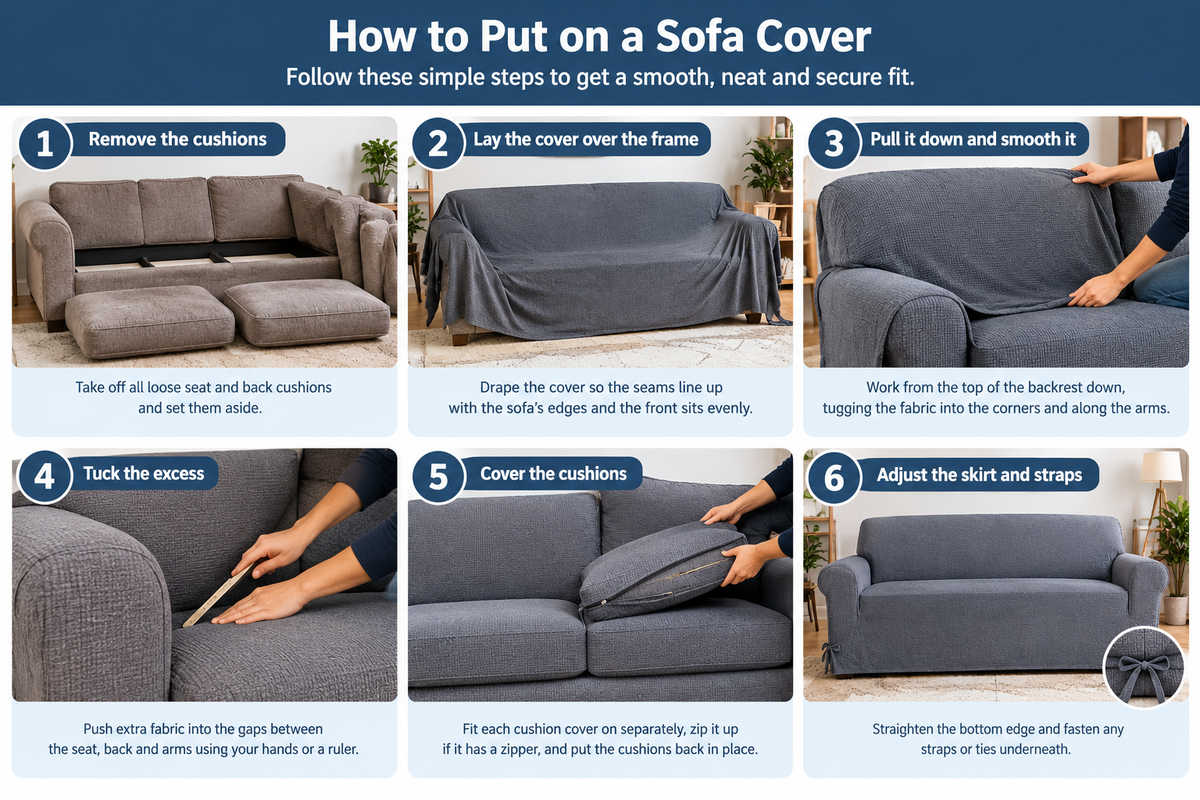
Once your sofa is repaired and your cover has arrived, the process is simple:
- Remove the cushions. Take off all loose seat and back cushions and set them aside.
- Lay the cover over the frame. Drape the cover so the seams line up with the sofa’s edges and the front sits evenly.
- Pull it down and smooth it. Work from the top of the backrest down, tugging the fabric into the corners and along the arms.
- Tuck the excess. Push extra fabric into the gaps between the seat, back, and arms using your hands or a ruler.
- Cover the cushions. Fit each cushion cover on separately, zip it up if it has a zipper, and put the cushions back in place.
- Adjust the skirt and straps. Straighten the bottom edge and fasten any straps or ties underneath.
Give yourself about 20 to 30 minutes and be patient. Most covers look rumpled at first and settle into place after a day or two of use.
Keep the Cover from Slipping
Slipping is the number one complaint with sofa covers, and it’s solvable. Foam tuck grips, which are inexpensive foam sticks, push into the crevices and hold the fabric firmly in place. Elastic straps that loop under the sofa keep the cover from riding up, and double-sided upholstery tape works on flat areas like the backrest. If the sofa has a leather or smooth surface, a non-slip mat underneath the cover adds extra grip. Smoothing the cover every few days keeps everything looking neat.
Common Mistakes to Avoid
The most frequent mistake is ordering the wrong size, so measure carefully and read the size chart. Another is ignoring the damage underneath, which leads to bumpy, uneven results. People also pick covers that are too thin, so rips and stains peek through, or forget about care instructions. Check whether the cover is machine washable before buying, since a sofa cover you can’t clean quickly becomes a new problem. Finally, don’t expect a cover to fix a broken frame or dead springs.
Conclusion
Covering an old, torn sofa with a sofa cover is one of the easiest and most affordable ways to refresh a room. Check that the frame is sound, repair tears and rebuild flat cushions, choose a thick, well-fitting cover, and measure carefully. Add a few grips to stop it from sliding. Do these things and your sofa can look neat and comfortable for years, with no need to replace it.
Frequently Asked Questions
Can I put a sofa cover directly over a torn sofa?
You can, but it’s better to repair the tears first. Trimming loose threads and patching holes keeps the surface smooth, so rips and padding don’t show through or snag the cover.
What type of sofa cover is best for hiding damage?
Thick fabrics like microfiber, quilted cotton, or twill hide damage best. A fitted slipcover in a medium or dark shade, or one with a subtle pattern, usually conceals tears and stains better than a thin, light stretch cover.
How do I stop a sofa cover from sliding off?
Use foam tuck grips pushed into the crevices, elastic straps under the sofa, and double-sided upholstery tape on flat areas. Smoothing and re-tucking the cover every few days also helps it stay put.
Are sofa covers worth it compared to buying a new sofa?
If the frame and cushions are in decent shape, absolutely. A cover costs far less than a new sofa and gives you a fresh look. If the frame is broken or the seats no longer support you, replacement or reupholstery is the better choice.
Can I wash a sofa cover?
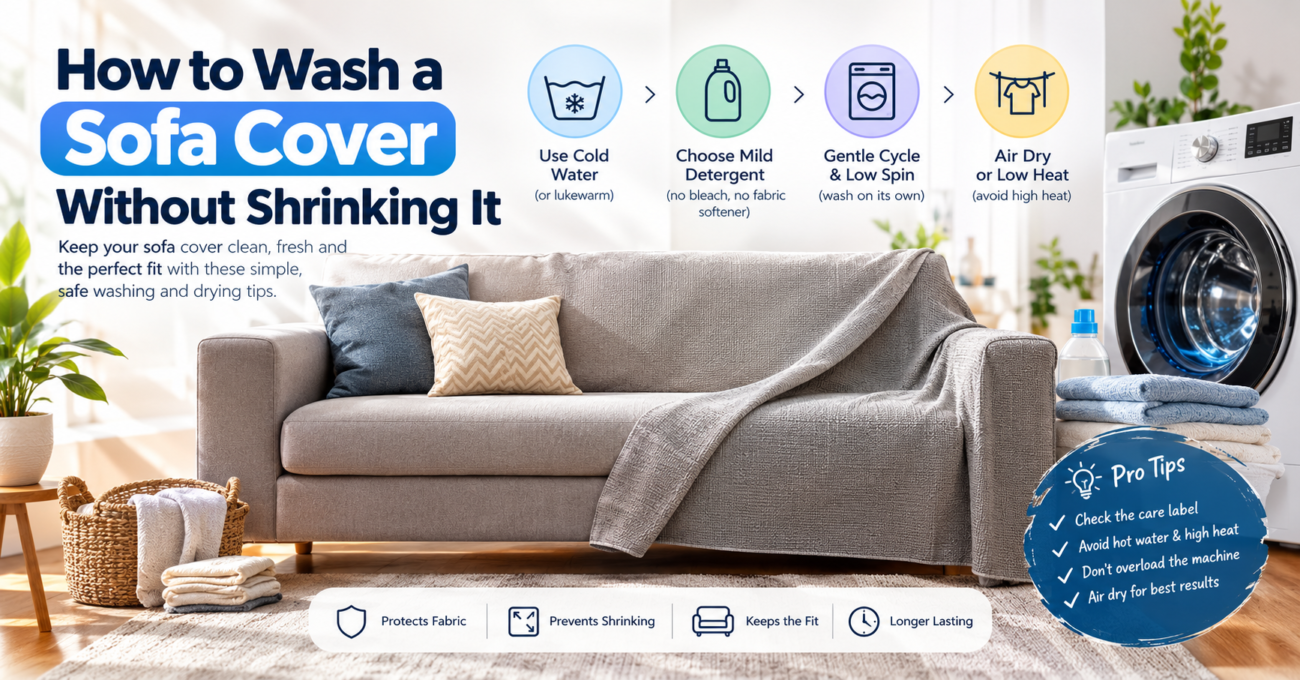
Most can be machine washed, but check the label first. Use a gentle cycle with cold water and air dry or tumble dry on low to prevent shrinking, then put the cover back on while it’s still slightly damp so it fits smoothly.