
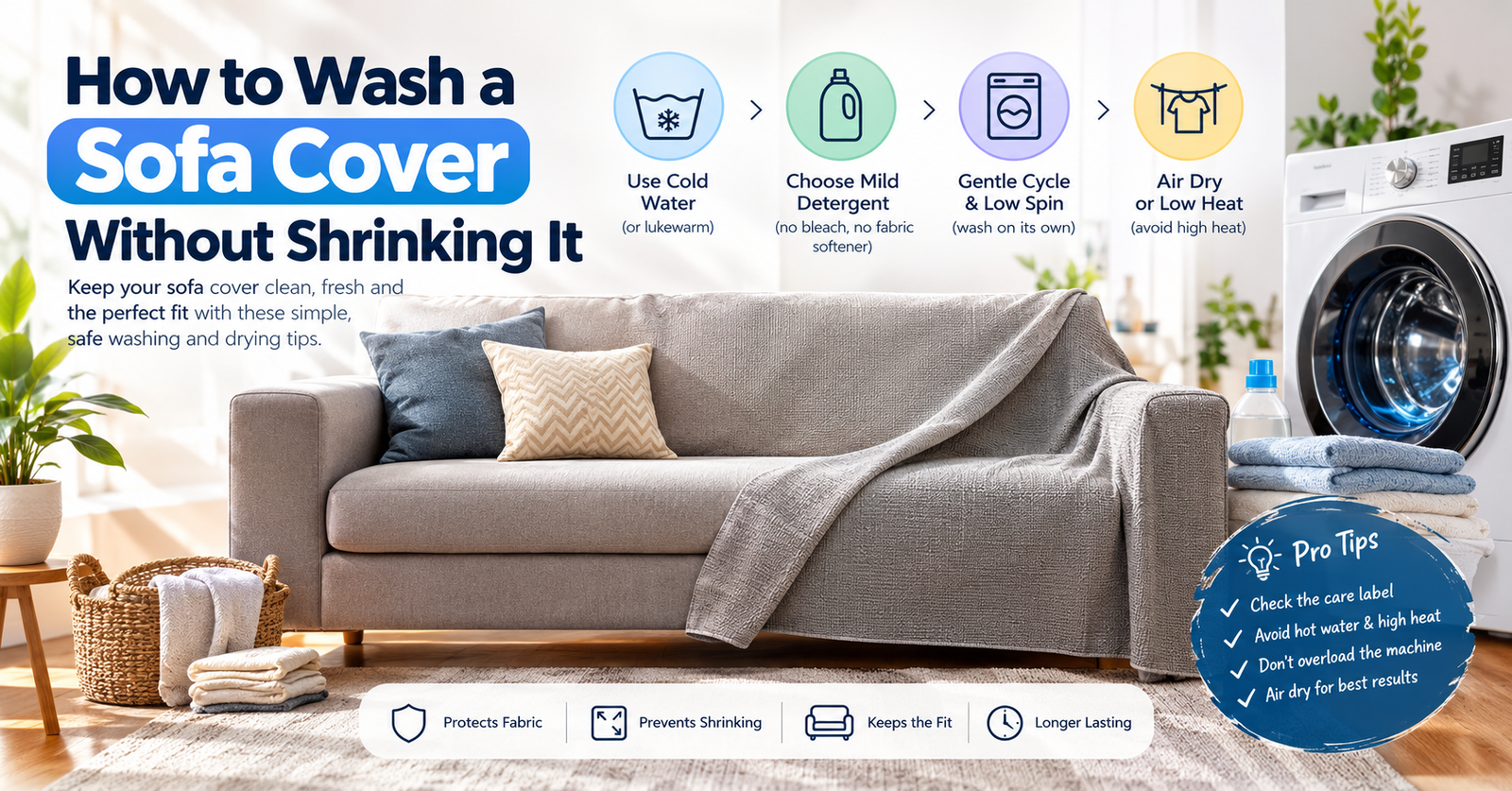
Learn how to wash a sofa cover without shrinking it, from safe water temperatures to drying tricks that keep the fit snug and smooth.
You pull the cover out of the dryer, carry it to the living room, and it won’t reach the corners of the sofa. Almost everyone who has washed a removable cover has had that moment. Knowing how to wash a sofa cover without shrinking it saves you from a ruined cover and an expensive replacement. The good news is that shrinking is mostly predictable. It comes down to heat, agitation, and the type of fabric, and you can control all three with a few small habits.
Why Sofa Covers Shrink in the First Place
Fabric shrinks because its fibers are under tension when they’re woven, and heat plus movement lets them relax and tighten up. Hot water, a long spin, and a blast in the dryer are exactly the conditions that make that happen. The result is a cover that’s a size or two smaller than it was, with seams that pull and sag where they used to sit flat.
Fabric Type Makes a Big Difference
Not every cover reacts the same way. A thick cotton slipcover and a stretchy polyester one behave very differently in the same wash cycle, so it helps to know what you’re dealing with.
Cotton and Linen
Natural fibers are the biggest shrinkers. Cotton can tighten noticeably after one hot wash, and linen is just as sensitive. Rayon and viscose blends are even less forgiving, because they weaken when wet and can shrink unevenly. If your cover is mostly natural fiber, treat every step of the process gently.
Polyester and Microfiber
Synthetic fibers are far more stable. Polyester and microfiber rarely shrink much in the wash, but high heat can still cause problems, such as warping, wrinkles that set in, or a rough texture. Even with synthetics, cooler settings are the smarter choice.
Read the Care Label Before Anything Else
Before you toss the cover into the machine, find the care tag, usually sewn into a seam or under a cushion flap. It tells you the maximum water temperature, whether you can use a machine at all, and whether tumble drying is allowed. If the label says “dry clean only” or “spot clean only,” believe it. Those instructions exist because the fabric or the lining can’t handle full immersion, and ignoring them is the fastest route to a shrunken, misshapen cover.
If the tag is missing or unreadable, assume the most cautious option: cold water, gentle cycle, and air drying.
Prepare the Cover Before You Wash It
A little prep goes a long way. Taking five minutes before the wash protects the fabric and gives you cleaner results.
- Vacuum the cover (or the sofa while it’s still on) to remove crumbs, pet hair, and loose dust.
- Close all zippers and fasten any hooks or Velcro so they don’t snag the fabric.
- Turn the cover inside out to protect the surface and reduce pilling.
- Pre-treat stains with a small amount of mild detergent and dab gently, never scrub hard.
- Test any stain remover on a hidden corner first, since some products leave marks or fade color.
If you have several cushion covers, wash them one at a time or with plenty of room. Crowding them together increases friction, and friction is a quiet cause of shrinkage.
The Safest Way to Wash a Sofa Cover Without Shrinking It
Here’s where the real protection happens. The three things to control are temperature, detergent, and how roughly the machine treats the fabric.
Water Temperature and Detergent
Cold water is your best friend. Use cold or, at most, lukewarm water unless the care label specifically allows warmer. Cold water cleans well enough with a modern detergent and keeps fibers from tightening. Choose a mild, liquid detergent made for delicates or colors. Harsh powders can leave residue in thick fabric, and bleach can weaken fibers and fade color, so skip it. Measure the detergent carefully, because too much soap is harder to rinse out and leaves covers feeling stiff.
You’ll also want to skip fabric softener on most covers. It can coat the fibers and, over time, make the fabric attract more dirt.
Machine Settings and Load Size
Pick the gentle or delicate cycle with a low spin speed. A slower spin means less twisting and stretching, which helps the cover keep its original shape. Wash the cover on its own, or with only a few similar light items. A heavy load of jeans or towels will batter it.
If your cover is large, make sure the drum isn’t packed tight. Water and detergent need room to move through the fabric, and the cover needs space to float instead of being squeezed. For a very big slipcover, a large-capacity washer or a laundromat machine is a better option than forcing it into a small drum.
How to Dry a Sofa Cover Without Shrinking It
Drying is where most shrinking really happens, so this step deserves the most care. Heat is the enemy here, and a hot dryer can undo all your careful washing in minutes.
The safest method is to air dry. Hang the cover over a clothesline, a drying rack, or a shower rod, away from direct sunlight, which can fade colors. Reshape it with your hands while it’s damp, smoothing seams and pulling gently at the corners.
If you’re short on time and the care label allows a dryer, use the lowest heat setting or the air-only setting and stop the cycle while the fabric is still slightly damp. Bone-dry fabric is more likely to have tightened. Then put the cover back on the sofa while it’s still a little damp. The weight of the fabric and your hands smoothing it into place will stretch it back to the right size as it finishes drying, and it will fit better than if you’d dried it completely first.
A quick note on ironing: if you need to press out wrinkles, use a low heat setting that matches the fabric, and press while the cover is slightly damp. Never iron a synthetic cover on high heat.
Common Mistakes That Cause Shrinking
A few habits turn up again and again when covers come out too small.
- Using hot water because it “cleans better”
- Choosing a heavy-duty or high-spin cycle
- Tumble drying on high heat until completely dry
- Washing the cover with bulky or heavy items
- Skipping the care label and guessing
- Leaving a wet cover bunched up in the machine, which can set wrinkles
Avoiding these six mistakes does more for your cover than any special product could.
What to Do If Your Sofa Cover Already Shrank
Don’t panic and don’t throw it away yet. Mild shrinkage on natural fibers can often be reversed. Fill a tub or basin with lukewarm water and add a generous squirt of hair conditioner or a little baby shampoo, which relax fibers. Soak the cover for about 15 to 30 minutes, then lift it out and press out the excess water without wringing it hard.
While it’s still damp, stretch it gently with your hands in the direction it has shrunk, working slowly along the seams. Then fit it back on the sofa and tug it into place, tucking edges and smoothing the fabric as it dries. You may need to repeat the process once or twice. This works best on cotton and linen blends, and it won’t fix severe shrinkage or covers with a lining that has shrunk separately.
Conclusion
Washing a sofa cover without shrinking it isn’t complicated, but it does take patience. Check the care label, prep the cover, wash in cold water on a gentle cycle, and avoid high heat when drying. Air drying or finishing the cover on the sofa while it’s slightly damp keeps the fit snug and the fabric soft. With these habits, your sofa cover stays clean, fresh, and the right size for years.
Frequently Asked Questions
Can I put a sofa cover in the dryer?
Only if the care label allows it. If it does, use the lowest heat or an air-only setting and take the cover out while it’s still slightly damp. Finish drying it on the sofa, which helps it stretch to fit. Air drying is the safest choice, especially for cotton and linen.
How often should I wash my sofa cover?
For most households, every two to three months is enough. If you have pets, kids, or people who eat on the sofa, washing every month or so keeps odors and stains from building up. Vacuuming between washes helps extend the time between full cycles.
Does cold water really clean a sofa cover properly?
Yes, for everyday dirt and light stains. Modern detergents are designed to work in cold water, and it’s much kinder to the fibers. For tougher stains, pre-treat the spot or let the cover soak briefly in cold water with detergent before washing.
Can I wash a sofa cover that says “spot clean only”?
It’s best not to. That label usually means the fabric, backing, or stuffing can’t handle soaking. Use a damp cloth and a little mild detergent on the stained area, blot gently, and let it air dry. Machine washing could cause shrinking, color bleeding, or a warped shape.
Should I wash the cushion inserts too?
Usually not. Most inserts are made of foam or fiber fill and don’t do well in a washing machine. Remove the covers and wash those, then air out the inserts in fresh air and vacuum them lightly. Check the insert’s own label if you’re unsure.