
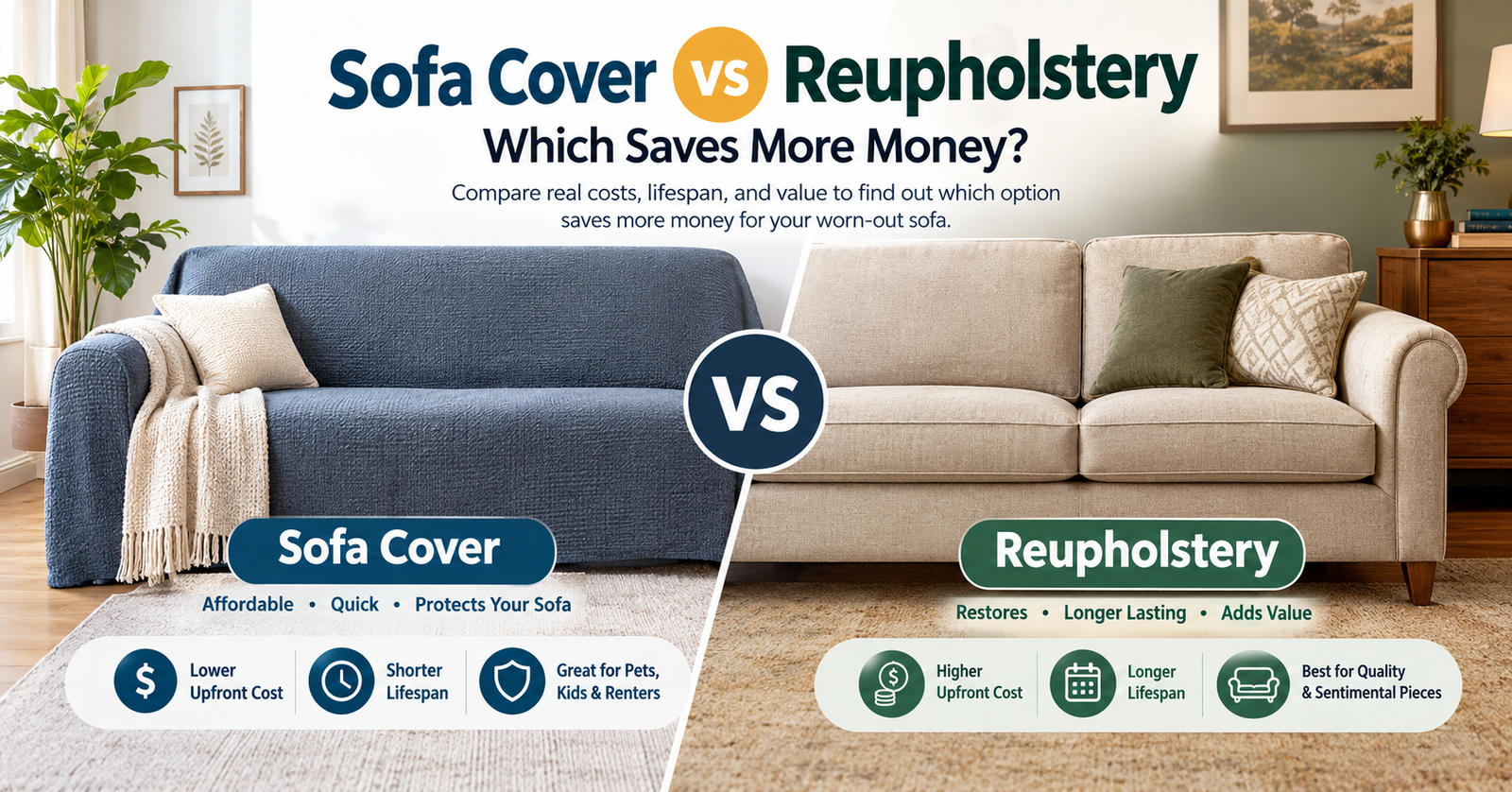
Sofa cover vs reupholstery: compare real costs, lifespan, and value to find out which option saves more money for your worn-out sofa.
Your sofa still feels comfortable, but the fabric tells a different story. There’s a stain that won’t budge, a worn patch on the armrest, or a color that stopped matching your room years ago. Now you’re stuck between two fixes, and the sofa cover vs reupholstery question comes down to one thing: what will actually leave more money in your pocket? The cheaper option today isn’t always the cheaper option over time. Let’s work through the real numbers and the situations where each choice wins.
What Is the Difference Between a Sofa Cover and Reupholstery?
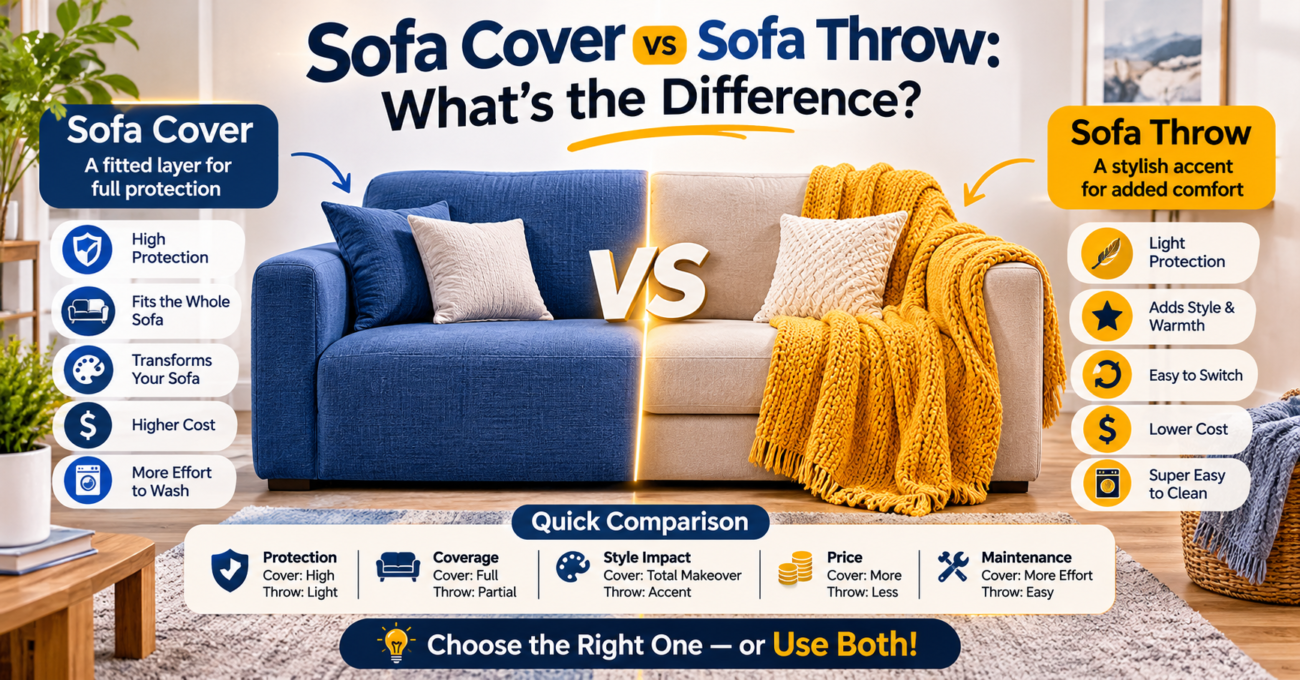
A sofa cover is a removable layer that fits over your existing furniture. It can be a stretchy one-piece cover, a tailored slipcover, or a simple throw. Nothing about the sofa itself changes. You put the cover on, and it hides whatever is underneath.
Reupholstery is a full rebuild of the sofa’s outer layer. A professional strips off the old fabric, inspects the foam, padding, and frame, repairs what needs repairing, and fits new material. You end up with something close to a new sofa built on your old bones.
So one is a cosmetic layer and the other is a restoration. That difference explains almost every price gap you’ll see below.
Sofa Cover vs Reupholstery: A Cost Breakdown
Prices vary by country, fabric, and sofa size, so treat the figures here as rough ranges rather than quotes. The pattern holds almost everywhere, though.
Upfront Cost of a Sofa Cover
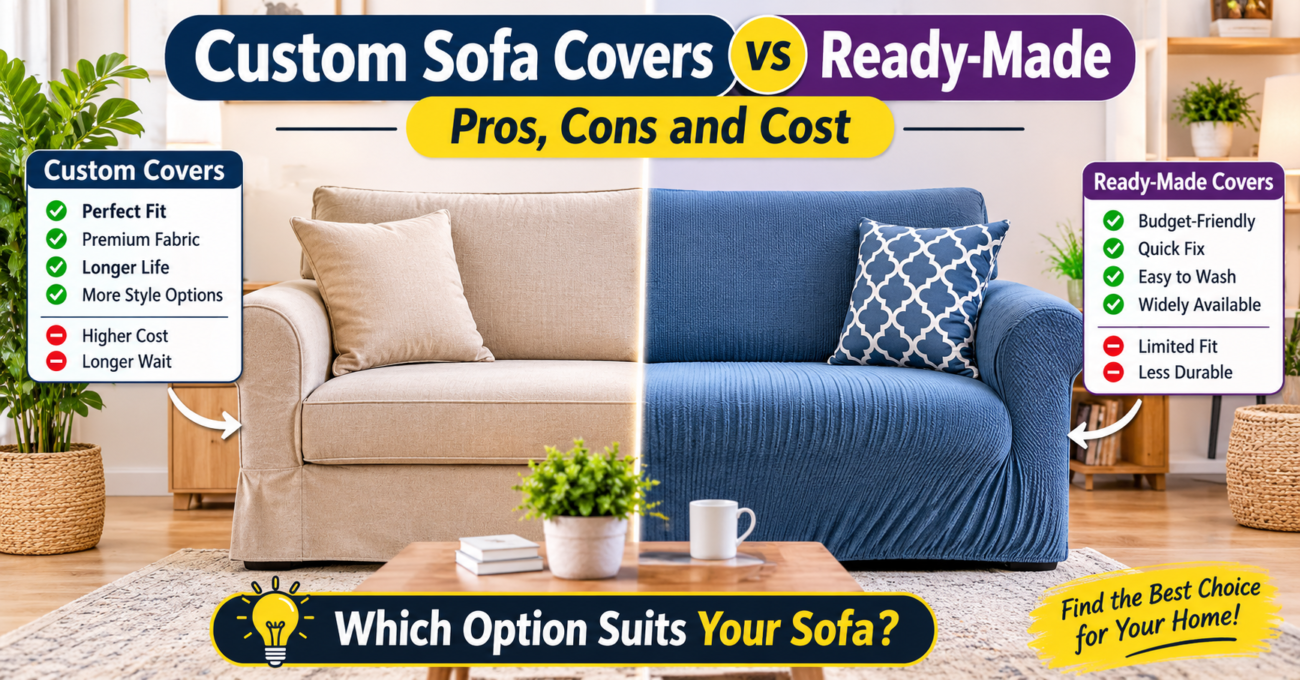
Ready-made stretch covers are the budget end of the market. For a three-seater, you’ll often pay somewhere between $30 and $150, depending on quality. Custom-fitted slipcovers, made to your sofa’s exact measurements, cost more, commonly a few hundred dollars and sometimes up to $1,000 for premium fabrics and detailed tailoring.
The big appeal is speed. You can order a cover tonight and have a refreshed living room by the weekend. There’s no waiting list and no sofa leaving your home.
Upfront Cost of Reupholstery
Reupholstery is a different league. A standard three-seat sofa often runs from roughly $1,000 to $3,000 or more once you add labor and fabric. Labor alone usually makes up a large share of the bill, since the job involves stripping, repairing, cutting, and sewing. Fabric choice swings the total heavily. A basic cotton blend sits at the lower end, while leather or high-performance fabrics push the price up fast. Replacing worn foam adds more on top.
You’ll also be without your sofa for a few weeks in many cases, which is worth factoring into the plan.
Cost Per Year of Use
The sticker price only tells half the story. Consider a $100 stretch cover that lasts about two years before it stretches out or fades. That’s $50 a year. A $2,000 reupholstery job on a well-built sofa that then lasts another 10 to 15 years works out to roughly $130 to $200 a year. On paper, the cover wins on yearly cost, but only if the sofa underneath is still in good shape. A cover on a collapsing frame just hides a problem you’ll pay for later.
When a Sofa Cover Saves You More Money
A cover is the better deal in several common situations. If your sofa is structurally sound but cosmetically tired, a cover buys you years at a tiny fraction of the cost. It’s also the smart pick when you have pets or small kids. Washable covers take the abuse so the original upholstery stays protected, and you can replace a ruined cover for far less than you’d spend redoing a sofa that gets clawed or spilled on again.
Covers also suit renters, people who redecorate often, and anyone planning to replace the sofa within a few years. Why invest $2,000 in a piece you’re about to retire? A cover is a short-term bridge that doesn’t lock you in.
When Reupholstery Is the Smarter Investment
Reupholstery earns its price when the sofa itself is worth keeping. Older furniture is often built with hardwood frames, tight joinery, and quality springs that many modern sofas can’t match. If you own a well-made piece, reupholstering it can cost less than buying something comparable new, since a new sofa with similar build quality may run well past $3,000.
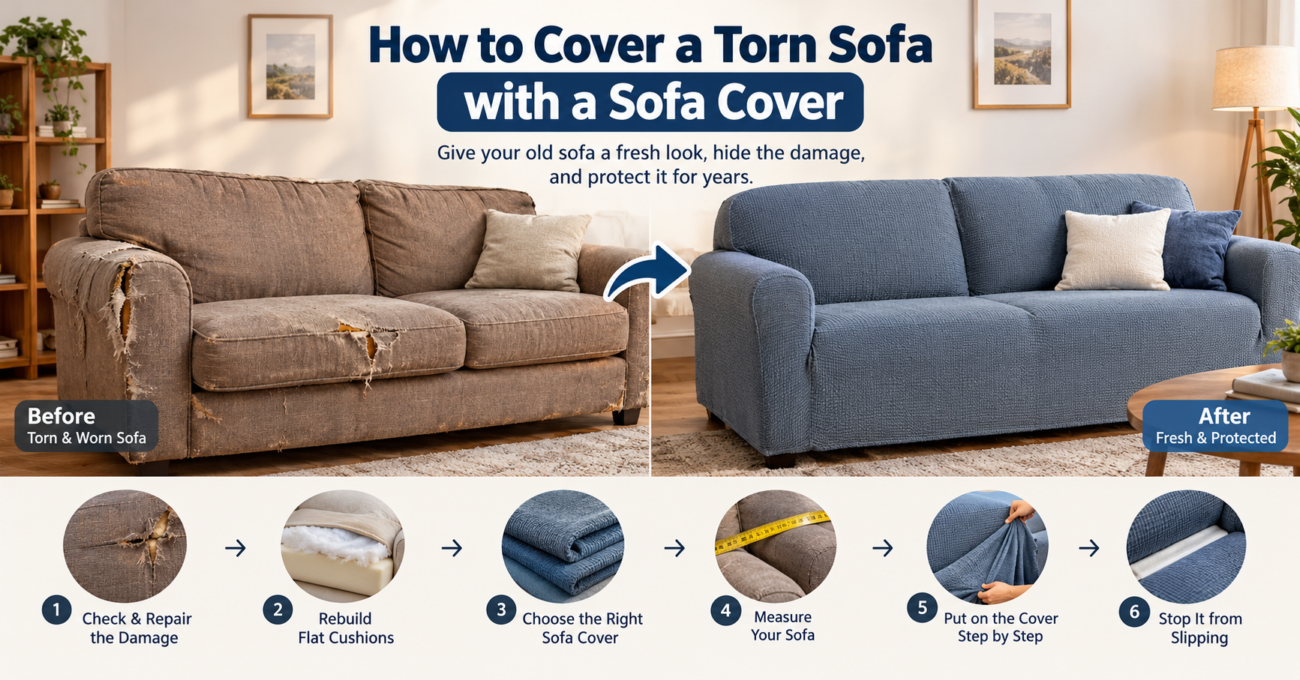
It also makes sense when the sofa has sentimental value, an unusual shape, or a size that’s hard to replace. And if the cushions have gone flat, reupholstery lets you replace the foam at the same time. A cover can’t fix sagging, so you’d end up with a fresh-looking sofa that’s still uncomfortable.
Hidden Costs People Forget
Neither option is as simple as the price tag suggests. With covers, the hidden cost is replacement. Cheap covers shift, bunch, and wear out, and buying one every year or two adds up. Some owners spend more on three budget covers than one good custom slipcover would have cost.
Reupholstery hides its costs in the details. Hidden frame damage, broken springs, or ruined padding can raise the quote once the old fabric comes off. Delivery and pickup fees can apply too. Always ask for a written estimate that spells out what’s included, and ask what happens if the frame needs repairs.
How to Decide: A Simple Checklist
Before you spend anything, run through these questions:
- Is the frame solid, with no creaking, wobbling, or broken slats?
- Are the cushions still supportive, or do they sag?
- Do you plan to keep this sofa for five years or longer?
- Would a similar-quality new sofa cost more than the reupholstery quote?
- Do pets or children put heavy wear on your furniture?
If the frame is solid and the cushions are fine, start with a quality cover. If the frame is excellent but the foam and fabric are both worn, and you want to keep the sofa for the long haul, reupholstery usually pays off. If the frame is failing, neither option is worth the money and it’s time to shop for a replacement.
Common Mistakes to Avoid
The biggest mistake is putting a cover over a sofa that’s already falling apart. You’ll spend money and still be uncomfortable. The second is buying the cheapest cover available. Poor fit looks sloppy and wears out quickly, so you end up paying twice.
On the reupholstery side, people often choose fabric before getting quotes, then discover the material alone eats half their budget. Get two or three estimates, ask to see fabric samples in your own lighting, and pick a durable weave if the sofa gets heavy use. Finally, don’t reupholster a low-quality, flat-pack sofa. The labor costs the same no matter how cheaply the sofa was built, so you’d be pouring good money into a poor foundation.
Conclusion
So, which saves more money in the sofa cover vs reupholstery debate? In the short term, a cover wins almost every time, often by a margin of ten to one or more. It’s fast, affordable, and ideal for sofas in decent structural shape or homes with pets and kids. Reupholstery costs far more upfront, but it can be the better long-term value when you own a well-built sofa you want to keep for another decade. The right answer depends on your sofa’s condition, how long you’ll keep it, and what a comparable replacement would cost. Check the frame and cushions first, then let the numbers guide you.
Frequently Asked Questions
Is it cheaper to buy a sofa cover or reupholster a couch?
A sofa cover is almost always cheaper upfront. Even a high-end custom slipcover usually costs well under the price of a professional reupholstery job. The gap narrows only when you compare long-term costs on a high-quality sofa that will last many more years.
How long do sofa covers last compared to reupholstery?
A ready-made stretch cover typically lasts one to three years with regular use, while a well-made custom slipcover can last several years. Quality reupholstery on a solid frame can last 10 to 15 years or more, depending on the fabric and how heavily the sofa is used.
Can a sofa cover fix a sagging couch?
No. A cover only changes the outer appearance. If your cushions are flat or the frame has weakened, the sofa will still feel uncomfortable underneath. In that case, new foam, reupholstery, or a replacement sofa is the better path.
Is reupholstering a sofa worth it?
It’s worth it when the sofa has a strong hardwood frame, good construction, and a design you love, especially if buying something equivalent new would cost more. It’s usually not worth it for cheap, lightweight furniture where the repair bill could approach the price of a new one.
What is the cheapest way to refresh an old sofa?
The cheapest route is a well-fitted cover or slipcover, sometimes combined with new cushion inserts or throw pillows. For minor damage like a single stain or a small tear, a professional spot repair or a patch can also be cheaper than either full option.