

Sofa cover vs sofa throw: learn how they differ in fit, protection, and style so you can pick the right one for your couch and lifestyle.
You’ve got a sofa that’s showing its age, or maybe a brand-new one you’d like to keep pristine. You search for something to dress it up and suddenly you’re staring at two products with confusingly similar names. So what is the real difference in the sofa cover vs sofa throw debate? In short, a sofa cover is a fitted garment for your whole couch, while a throw is a loose piece of fabric you drape over it. That one distinction changes how each product looks, how well it protects, and how much effort it takes to live with. Let’s walk through both so you can buy the right one the first time.
What Is a Sofa Cover?
A sofa cover is a piece of fabric made to enclose most or all of your sofa. Think of it as a tailored outfit for your furniture. It’s designed around the shape of the seat, back, and often the arms, so once it’s on, the couch looks like it’s wearing a new skin rather than hiding under a blanket.
People buy covers for practical reasons. They shield upholstery from pet hair, spilled coffee, sunlight fading, and the general wear of daily life. They’re also a budget-friendly way to refresh a sofa whose color or fabric you’ve grown tired of, without paying for reupholstery.
Types of Sofa Covers
Not all covers work the same way. Two styles dominate the market, and knowing which is which saves a lot of frustration.
Stretch Covers
Stretch covers are made from elastic fabrics like spandex blends. They stretch over the sofa and cling to its shape, which means they suit a wide range of sizes and designs. They’re easy to put on, but they can slip or bunch if the sofa has deep cushions or unusual curves. Many people tuck foam strips or rods into the seams to hold them in place.
Slipcovers
Slipcovers are tailored from non-stretch fabrics such as cotton, linen, or denim. They’re cut to match specific sofa dimensions, so they look polished and structured. The trade-off is that they need a closer match to your couch and may take more fiddling to get right. Some slipcovers cover each cushion separately, which gives a very neat finish.
What Is a Sofa Throw?
A sofa throw is a decorative blanket or lightweight textile you lay across your sofa. It might cover a single seat, drape over one arm, or run down the back of the couch. Unlike a cover, it doesn’t enclose anything. It simply sits on top, and you can move, fold, or swap it in seconds.
Throws do double duty. They add color, texture, and personality to a room, and they give you something warm to pull over your legs on a cold evening. A chunky knit in mustard yellow can turn a plain gray sofa into the focal point of a living room without any commitment.
Common Throw Materials
Throws come in a wide range of fabrics. Wool and cashmere blends feel luxurious and keep you warm. Cotton and linen are breathable and good for warmer climates. Faux fur adds a plush, cozy look, while acrylic knits are an affordable and easy-care option. The material you pick affects both the look and how often you’ll need to wash it.
Sofa Cover vs Sofa Throw: Key Differences
Now that we’ve defined both, let’s compare them directly. The differences show up in three main areas: how well they protect, how they look, and what they cost to keep up.
Protection and Durability
This is where a sofa cover clearly wins. Because it wraps around the cushions and often the arms and back, it blocks spills, claws, dirt, and sunlight from reaching the upholstery underneath. If you have a dog that treats the couch as its personal bed, or kids who snack in the living room, a cover is the sturdier shield.
A throw offers only partial protection. It covers the patch it’s laid on, and nothing else. A muddy paw print on an exposed cushion edge will still land on your upholstery. Throws can also slide around when someone sits down, leaving gaps right when you need coverage most. Still, for light protection, such as guarding a favorite seat from body oils or small crumbs, a throw can be enough.
Fit and Appearance
A cover aims to change the whole look of your sofa. A good one looks smooth and intentional, almost like the original upholstery. A bad one looks wrinkled and baggy, so fit matters enormously. You’ll need to measure your sofa’s width, depth, and arm style before you buy.
A throw works as an accent rather than a transformation. It adds a splash of pattern or color and lets the sofa underneath stay visible. There’s no measuring involved, and no worrying about whether it fits your sofa’s shape. That flexibility makes throws popular for people who like to redecorate with the seasons.
Cost and Maintenance
Sofa covers usually cost more than throws, especially tailored slipcovers for large sectionals. They also take more effort to wash, since you have to remove the whole thing, launder it, and put it back on without twisting the seams. Many stretch covers are machine washable, but it’s worth checking the care label first.
Throws are cheaper and far easier to maintain. Toss one in the washing machine, hang it to dry, and you’re done. Because they’re inexpensive, you can own several and rotate them as the mood strikes.
Here’s a quick side-by-side:
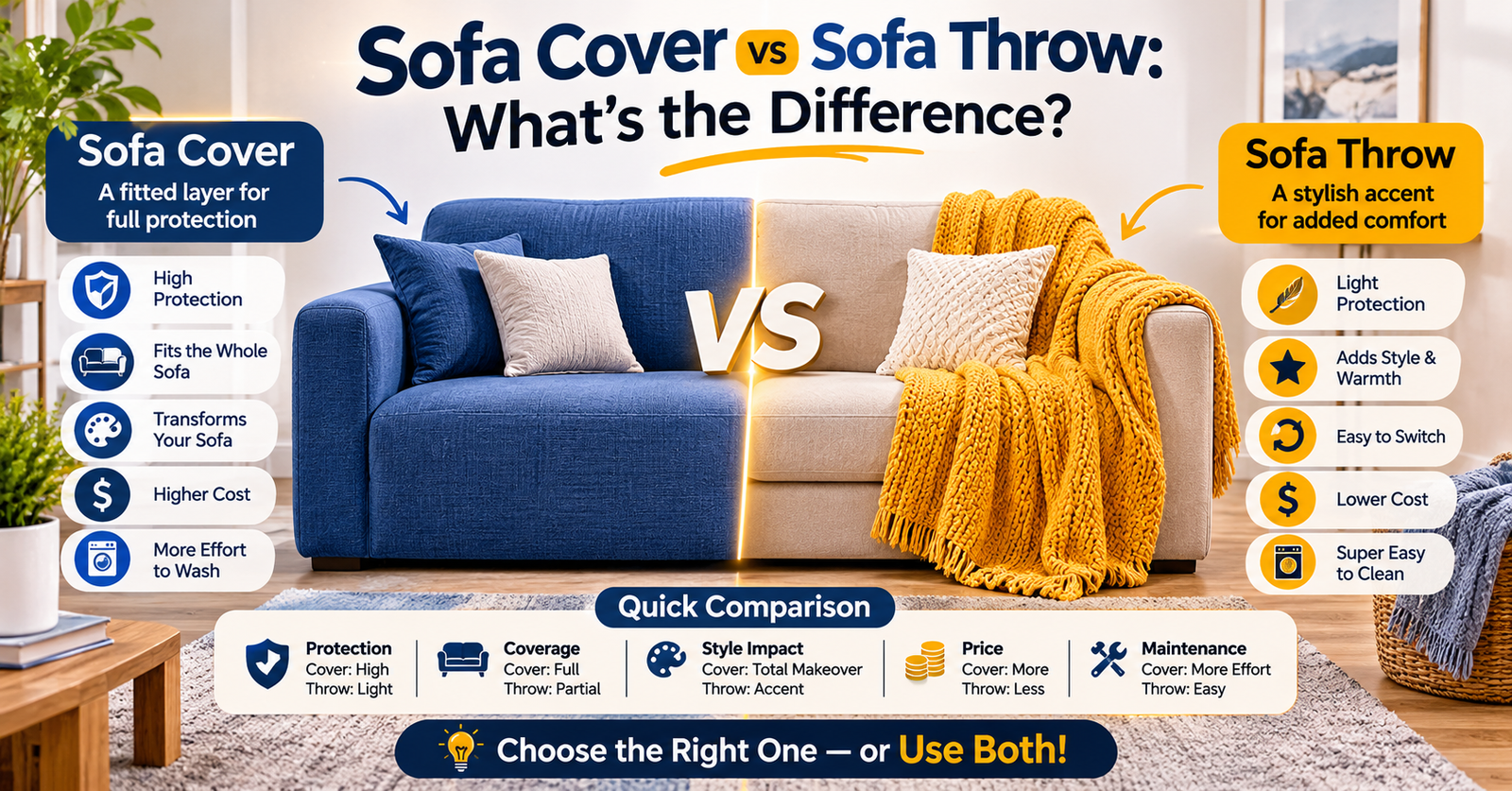
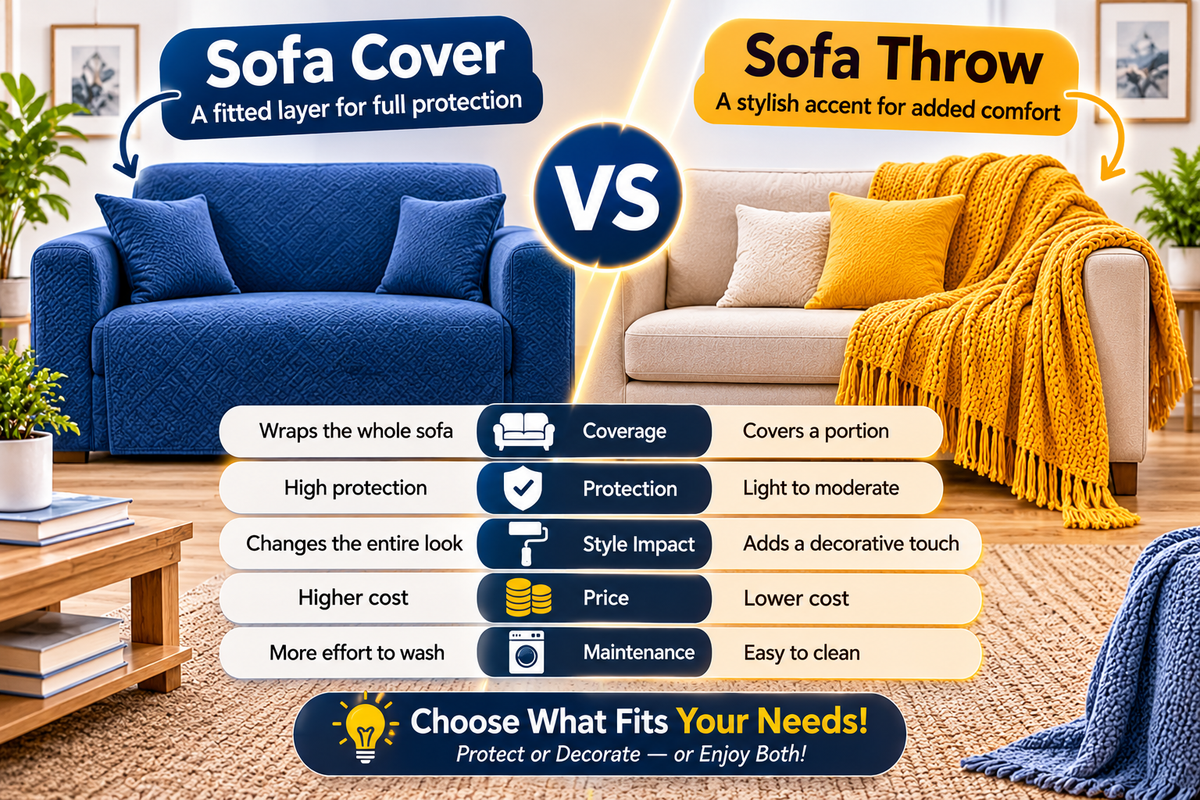
- Coverage: A cover wraps the sofa. A throw drapes over part of it.
- Protection: A cover is high. A throw is light to moderate.
- Style impact: A cover changes the sofa’s whole look. A throw adds an accent.
- Price: Covers cost more. Throws cost less.
- Upkeep: Covers take more effort to wash. Throws are quick to clean.
Which One Should You Choose?
Your lifestyle should decide this. Choose a sofa cover if you have pets or young children, if your sofa is stained or worn, or if you want a fresh color without buying new furniture. A cover is also a smart move for rental homes where you can’t replace furniture, or for a sofa you want to keep in good condition until you can afford an upgrade.
Choose a throw if your sofa is in good shape and you just want to add warmth and style. Throws suit people who love changing their decor often, who live in colder places, or who simply want a cozy blanket within arm’s reach. They’re also perfect for adding a pop of color to a neutral room.
Not sure? Think about what problem you’re solving. If it’s “my couch is getting damaged,” go with a cover. If it’s “my couch looks boring,” a throw is probably all you need.
Can You Use Both Together?
Absolutely, and many designers do. A fitted cover handles the heavy lifting of protection, while a throw layered on top adds texture and personality. A neutral cover in oatmeal or gray pairs beautifully with a patterned throw in a bolder shade. You get durable protection and a styled look, and you can swap the throw whenever you want a new vibe without touching the cover.
This combination also helps extend the life of both items. The throw takes the day-to-day contact, and the cover stays cleaner underneath. When the throw gets dirty, you wash it quickly, and the cover only needs a wash every so often.
Conclusion
The sofa cover vs sofa throw question comes down to purpose. A sofa cover is a fitted, protective layer that can transform or preserve the whole couch. A sofa throw is a loose, flexible accent that adds comfort and style with almost no effort. Covers cost more and protect better, while throws cost less and give you freedom to redecorate. Pick based on what your sofa needs most, or layer the two for the best of both worlds.
Frequently Asked Questions
Is a sofa throw the same as a sofa cover?
No. A sofa cover is a fitted piece that encloses the sofa, while a sofa throw is a loose blanket or textile draped on top. They serve different purposes: covers mainly protect and reshape the look of the sofa, while throws mainly add warmth and decoration.
Will a sofa throw protect my couch from pets?
It offers some protection, but not much. A throw covers only the area it’s laid on, and pets can easily push it aside or scratch the exposed parts. If you have pets that spend a lot of time on the couch, a fitted cover is far more reliable, and you can add a throw for extra comfort.
How do I measure my sofa for a cover?
Measure the width across the widest part of the sofa, the depth from front to back, and the height of the backrest. Also note the arm width and whether your sofa has a loveseat, three-seat, or sectional shape. Most manufacturers list sizes by seat count, so compare your measurements against their chart.
Can a sofa cover stay in place without slipping?
Yes, if you choose the right fit and add a little help. Look for covers with elastic straps or non-slip backing. You can also tuck foam tubes or pool noodle pieces between the cushions and the arms to anchor the fabric. A properly sized cover will stay put far better than one that’s too large.
How often should I wash a sofa cover or throw?
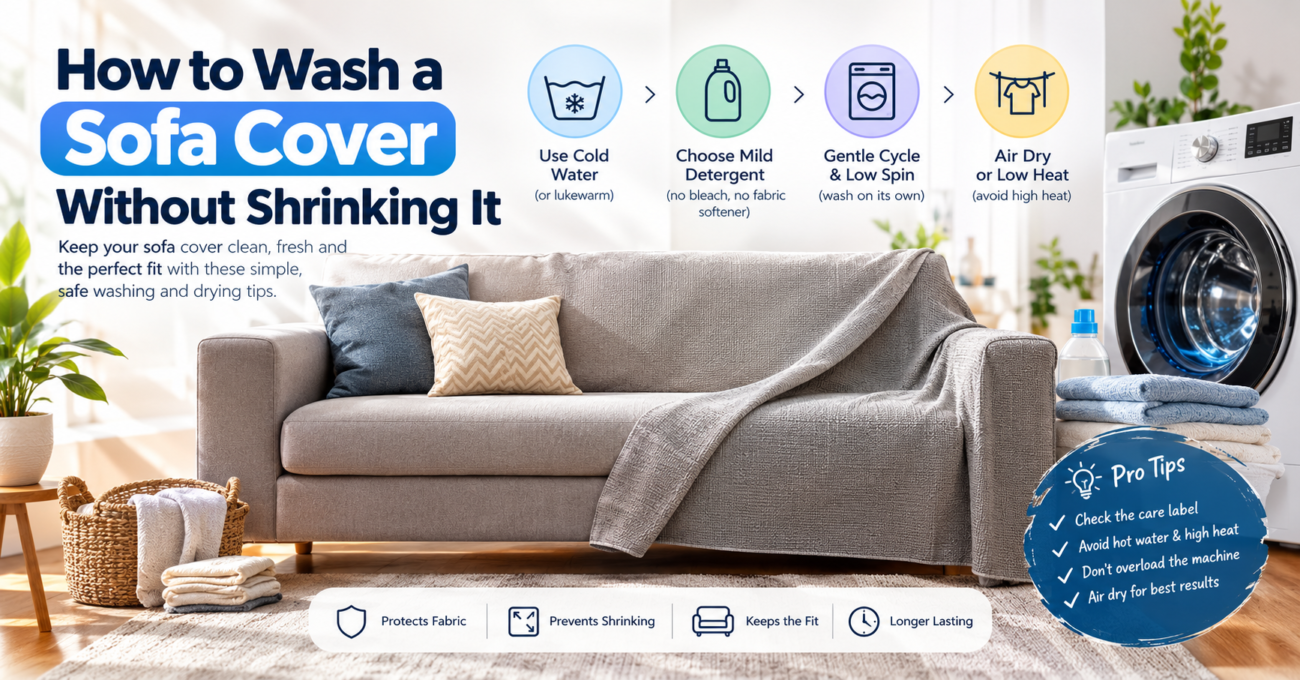
Throws can be washed every few weeks, or more often if you use them daily. Sofa covers typically need washing every one to three months, depending on how heavily the sofa is used and whether you have pets or kids. Always follow the care label to avoid shrinking or damaging the fabric.









One thought on “Sofa Cover vs Sofa Throw: What’s the Difference?”