

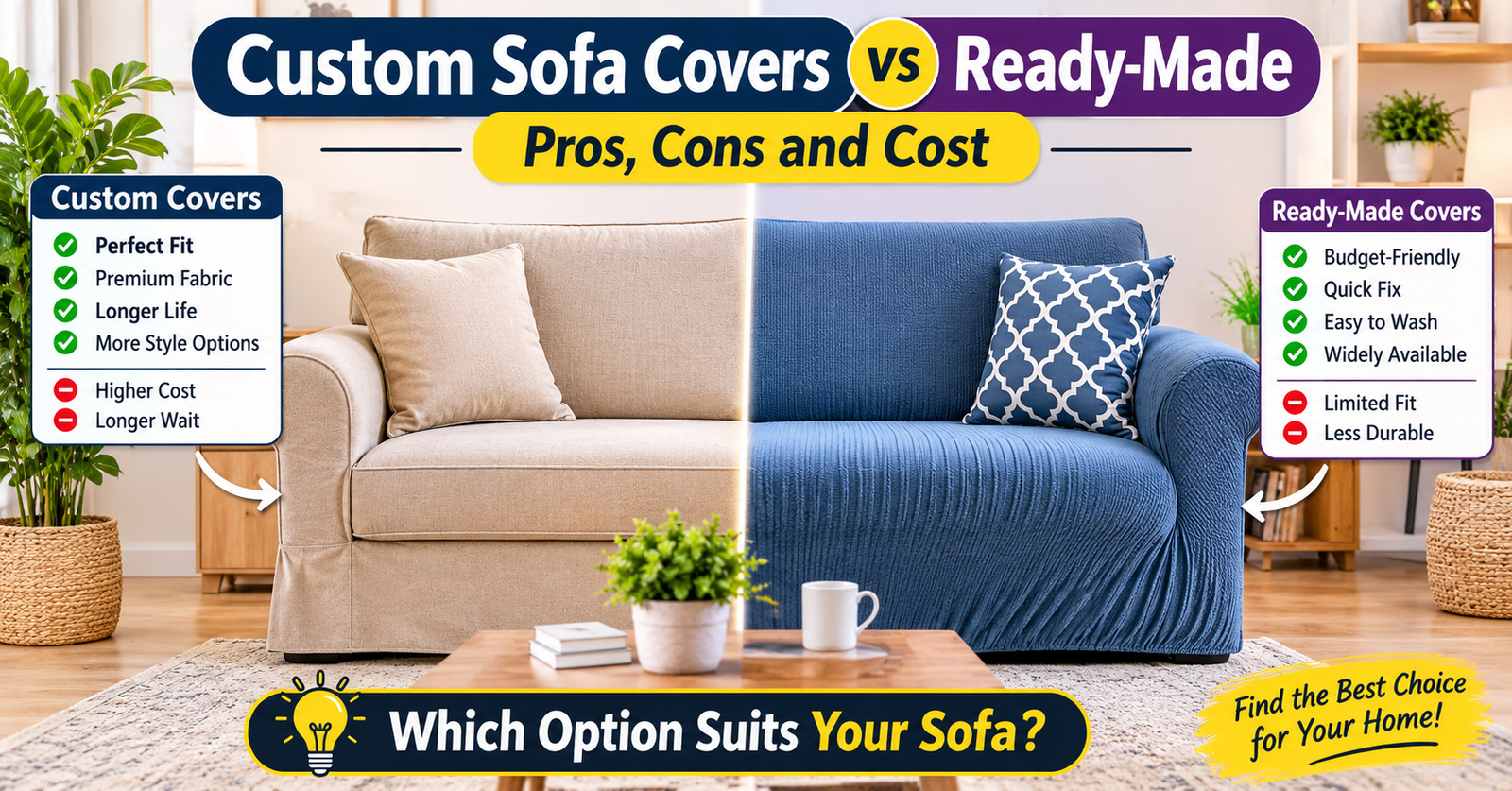
Custom sofa covers vs ready-made: compare fit, durability, style and cost to decide which option suits your sofa, budget and lifestyle best.
Your sofa is probably the most used piece of furniture in your home, and sooner or later it starts to show it. Stains, pet hair, faded armrests and sagging fabric all push people toward covers. Then comes the real question: should you buy a stretchy ready-made cover off the shelf, or pay more for a tailored one? The debate over custom sofa covers vs ready-made isn’t only about price. It’s about how you want your living room to look and feel, and how long you want the fix to last.
This guide walks through how each option works, where each one shines, where it falls short, and what you can realistically expect to spend. By the end, you’ll know which route makes sense for your sofa.
What Are Ready-Made Sofa Covers?
Ready-made covers, often called universal or stretch covers, are mass-produced in standard sizes such as one-seater, two-seater and three-seater. Most are made from elastic fabrics like polyester-spandex blends or jersey knit, which is how a single size can stretch to fit many different sofa shapes. You’ll find them in furniture stores, big retail chains and online marketplaces, and you can usually have one at home within days.
They work on a simple principle: stretch first, tuck second. You pull the cover over the frame, then push foam tubes or fabric flaps into the gaps between the cushions to hold everything in place. When the sofa is a basic shape, the result can look quite neat.
What Are Custom Sofa Covers?
Custom covers are made to your sofa’s exact measurements. A tailor or specialist maker measures the backrest, arms, seat cushions, base and sometimes the legs, then cuts and stitches the fabric to match. Because the pattern follows your sofa rather than a size chart, the cover can include details like piped edges, separate cushion covers, pleated skirts or zip closures.
The fabric choice is also wide open. You can pick upholstery-grade cotton, linen blends, velvet, microfiber or washable canvas, instead of whatever stretch fabric the manufacturer chose for the mass market.
Fit and Appearance
Fit is where the biggest visual difference shows up. A ready-made cover can look good on a plain sofa with soft curves, but it often struggles with sharp corners, wooden arms, reclining mechanisms, L-shaped sectionals or unusual backs. You may see wrinkles across the seat, fabric bunching at the arms or a cover that creeps out of position every time someone sits down.
A custom cover follows every line of the frame. It looks less like a cover and more like new upholstery, and it stays put because the fabric isn’t fighting to cover a shape it wasn’t designed for. If appearance matters to you, for example in a living room that guests see often, this difference is hard to ignore.
Ready-Made Covers: Pros and Cons
Pros of Ready-Made Covers
The biggest advantage is price. Ready-made covers are the budget-friendly option, and you can often get one for a fraction of what a tailored cover costs. They’re also fast. There’s no appointment, no waiting for fabric to be cut and no back-and-forth about measurements. If a guest is arriving this weekend or a puppy just chewed your armrest, you can solve the problem quickly.
They’re also easy to replace and wash. Many are machine-washable, and because they’re inexpensive, owning two and rotating them is realistic. They suit rented homes, student flats and temporary setups where a long-term investment doesn’t make sense.
Cons of Ready-Made Covers
The compromise is fit. Even a “universal” cover is a guess at your sofa’s shape, and the guess is sometimes wrong. Stretch fabrics can also lose elasticity after repeated washing, leaving the cover baggy. Thinner materials tend to wear at the seams and armrests faster, especially in homes with children or pets that scratch.
Design choice is another limit. Mass-market covers come in a narrow range of colors and patterns, and the fabric often feels more like activewear than furniture. You may have to tuck and adjust the cover regularly to keep it looking tidy.
Custom Sofa Covers: Pros and Cons
Pros of Custom Covers
A tailored cover gives you the best fit, the widest fabric choice and usually better durability. Heavier fabrics and reinforced stitching can handle daily use for years. You can choose a fabric that matches your lifestyle, such as tightly woven material for pet households or a stain-resistant finish for families with young kids.
Custom covers also solve problems that ready-made ones can’t. If your sofa is vintage, oddly shaped, oversized or a sectional with a chaise, a made-to-measure cover may be the only option that fits properly. And because fit is precise, you rarely have to adjust it.
Cons of Custom Covers
The obvious downside is cost. You’re paying for measurement, pattern cutting, fabric and labor. Lead times are another factor: depending on the maker, it can take a couple of weeks or longer to get your cover. Mistakes in measuring can be expensive to fix, since the cover is built for your sofa and nobody else’s.
There’s also less flexibility if you plan to replace the sofa soon. A cover tailored to one sofa won’t suit its replacement, so custom works best when you intend to keep the piece for a good while.
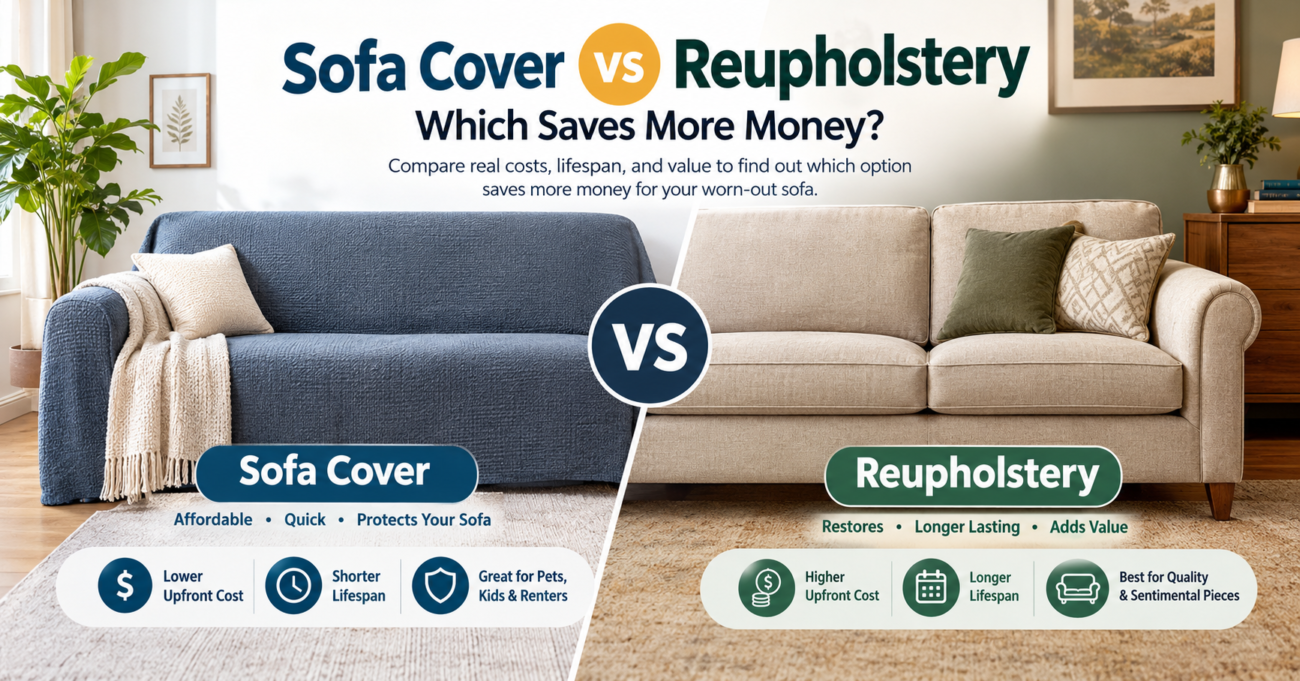
Custom Sofa Covers vs Ready-Made: Cost Comparison
Upfront Price
Prices vary a lot by country, sofa size, fabric and maker, so treat these as rough guides rather than quotes. As a general pattern, ready-made covers sit at the low end, often costing a small fraction of a custom job. A basic stretch cover for a three-seater might cost less than a restaurant meal for a family, while a tailored cover in good upholstery fabric can cost several times as much, and sectionals or heavy fabrics push that higher.
If your budget is tight or the sofa is already worn out, the lower price makes ready-made covers hard to argue with.
Long-Term Value
Cheap isn’t always cheaper. If a ready-made cover looks baggy after a year and you replace it twice, the total spend starts to approach the price of one custom cover that lasts much longer. Cost per year of use is the fairer measure. A durable custom cover that survives five or six years of daily use may cost less per year than three budget covers that each last a season or two.
That said, the math only works if the sofa itself is worth protecting. Putting an expensive cover over a sofa with a broken frame or sagging foam is money wasted. Fix or replace the sofa first if it’s falling apart.
Which Option Suits Your Situation?
- Ready-made covers make sense when you’re renting, working with a small budget, protecting a sofa from a short-term threat like a new pet, or dealing with a simple, standard-shaped sofa. They’re also a sensible test: if you aren’t sure whether you like the look of a covered sofa, a cheap cover lets you find out.
- Custom covers make sense when the sofa is a long-term piece, when its shape is unusual, or when appearance matters as much as protection. They’re also the better pick if you want a specific fabric or color to match your room, or if previous ready-made covers have kept slipping and wrinkling.
If you’re still undecided, a good middle path is a high-quality ready-made cover in a tighter, thicker fabric, or a semi-custom option that comes in several size categories. These cost more than a basic stretch cover but less than full tailoring.
Common Mistakes to Avoid
The most common error is buying by seat count alone. A “three-seater” from one brand can be a very different size from another’s, so always check the manufacturer’s dimensions against your sofa. Another mistake is choosing a cover purely on color without thinking about fabric. A beautiful velvet may look wonderful but show pet hair constantly, while a coarse weave may feel scratchy against skin.
Finally, many people skip the care label. A cover that can’t be machine-washed defeats the purpose if you bought it to handle spills.
Measuring Your Sofa Correctly
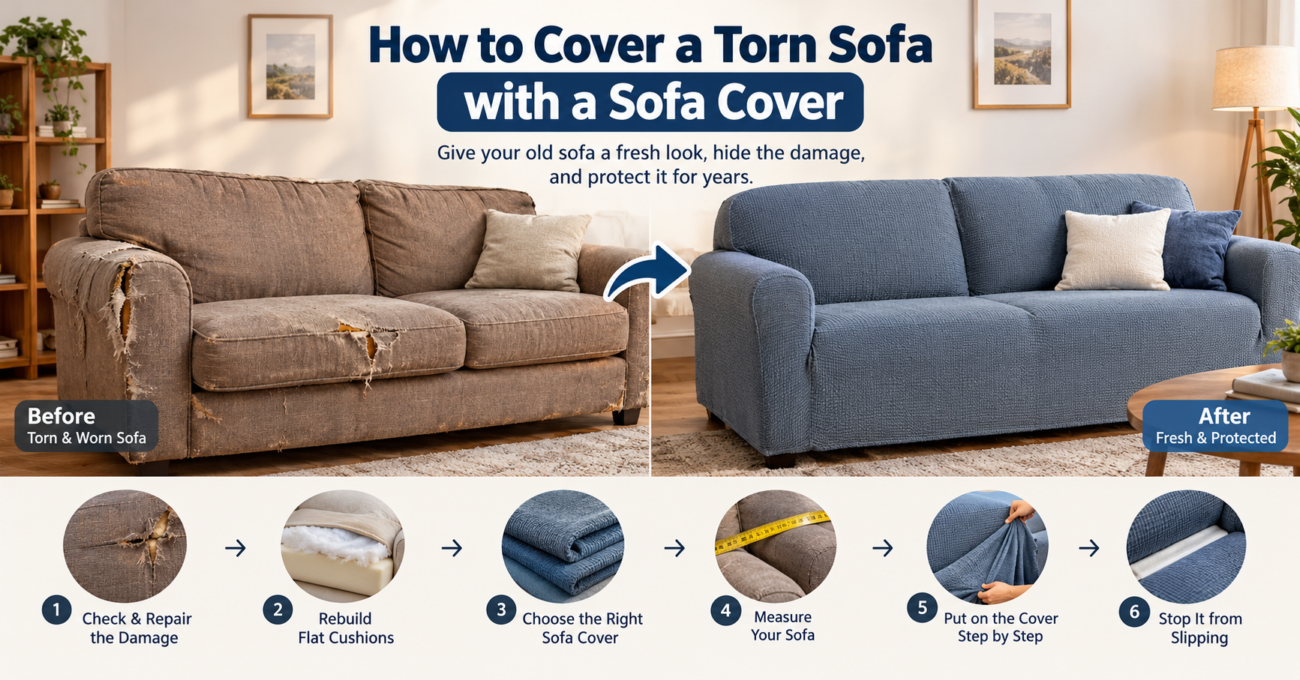
Whichever route you choose, accurate measurements save you money and frustration. Measure the width of the sofa at its widest point, including the arms. Measure the depth from the front edge to the back, the height from floor to the top of the backrest, and the arm height and width. For cushions, measure each one separately. Write everything down, measure twice, and if you’re ordering custom, ask the maker whether they prefer to measure on site.
Conclusion
The choice between custom sofa covers vs ready-made comes down to three things: your budget, your sofa’s shape and how long you plan to keep it. Ready-made covers are affordable, quick and perfectly good for simple sofas and short-term needs. Custom covers cost more, but they deliver a precise fit, better fabric and a longer life, which often makes them the better value for a sofa you love. Be honest about how you use your living room, measure carefully, and pick the option that fits your life as well as your furniture.
Frequently Asked Questions
Are custom sofa covers worth the extra money?
They can be, especially when your sofa has an unusual shape or you plan to keep it for many years. The better fit, stronger fabric and cleaner look often justify the higher price. If your sofa is basic, old or temporary, the extra cost is harder to justify.
Do ready-made sofa covers fit all sofas?
No. They fit standard shapes best, and even then the fit depends on how much stretch the fabric has. Sofas with reclining parts, exposed wooden frames, deep sectionals or very square arms are the most difficult to fit with a universal cover.
How long do sofa covers usually last?
It depends on the fabric, how often the sofa is used and how the cover is washed. Budget stretch covers may start to loosen or wear within a year or two of heavy use, while well-made custom covers in sturdy fabric can last several years with proper care.
Can I wash custom sofa covers in a washing machine?
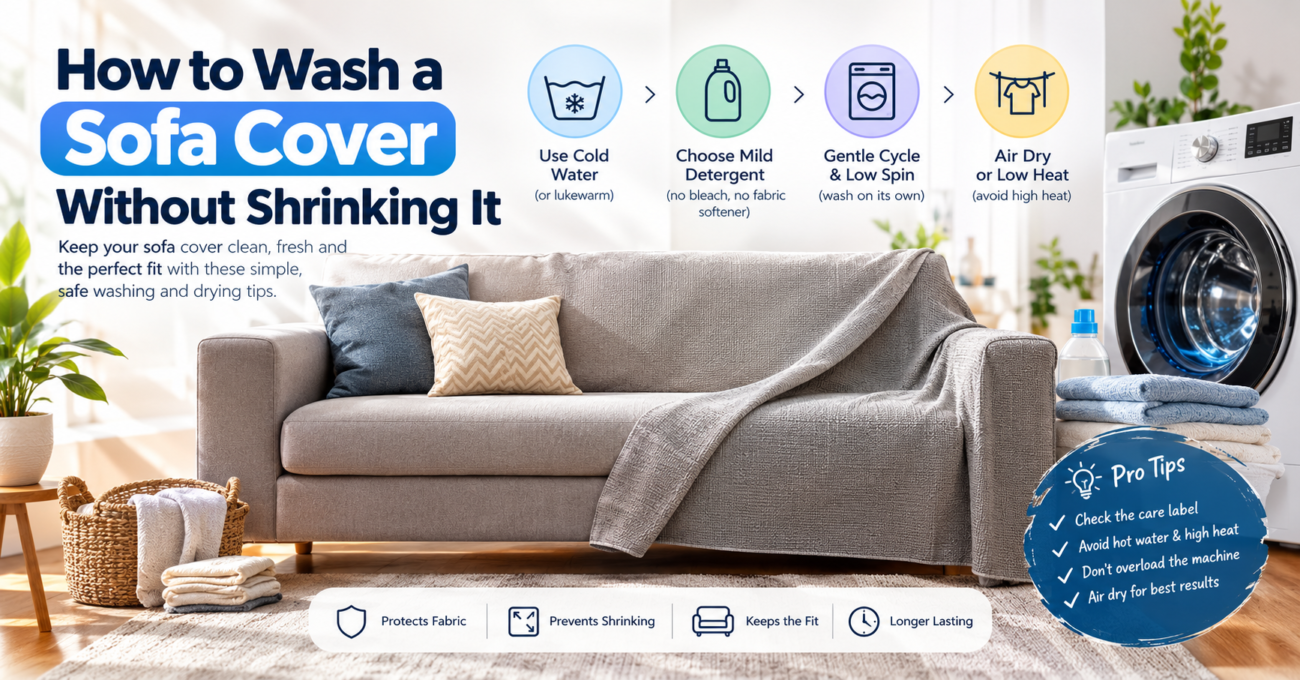
Many can, but it depends on the fabric. Cotton blends and washable canvas are often fine on a gentle cycle, while velvet or heavily structured fabrics may need dry cleaning. Ask your maker about care instructions before you choose the material, and avoid high heat to prevent shrinkage.
What is the best way to stop a ready-made cover from slipping?
Push foam tubes or rolled towels into the gaps between the seat and the backrest to hold the fabric in place. Non-slip grip strips and cover clips can also help. Choosing the right size in the first place is the most effective fix, since an oversized cover will always shift.






One thought on “Custom Sofa Covers vs Ready-Made: Pros, Cons and Cost”